- 03/08/2026
- in Carpet Care Guides, Carpet Cleaning Tips
- by Ben Hobbs
- 8
- 0
Blog
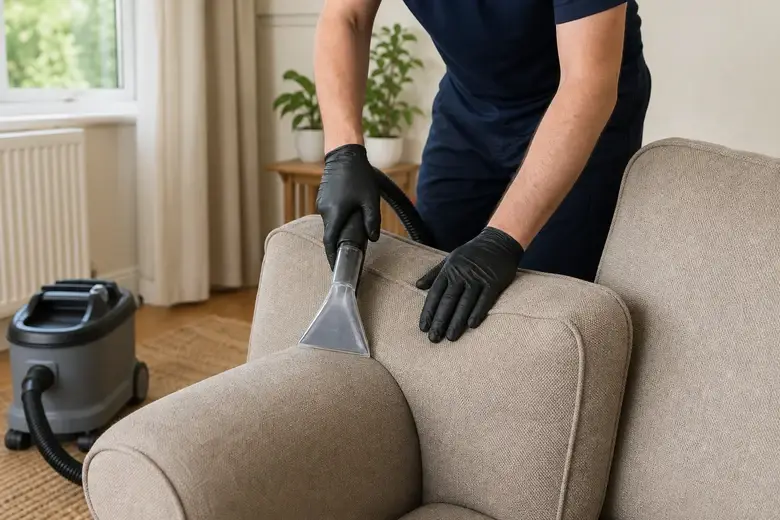
Do not assume that a steam cleaner is safe for every sofa fabric. Some robust upholstery may tolerate controlled moisture or professional extraction, but heat and moisture can cause watermarks, shrinkage, dye movement, texture changes and slow drying. Check the manufacturer’s instructions, fabric type and sofa condition before choosing a method. Delicate, unknown or damaged upholstery should be professionally assessed.

You can steam clean a sofa only when the fabric, construction and manufacturer guidance make controlled wet cleaning suitable. Some upholstery can tolerate careful moisture, but other sofas can be damaged by heat, overwetting or agitation.
The care label and original manufacturer guidance should be checked before choosing any sofa steam cleaner. Fabric inspection comes before equipment choice because a machine marketed for upholstery cannot identify dye stability, weak seams, sun fading, pile sensitivity or old damage. A hidden test is useful, but it does not override manufacturer restrictions.
Existing wear, loose stitching, watermarks, previous stain treatments or faded arms can affect the final result. If the fabric is unknown or valuable, it is safer to ask for professional assessment before using heat or moisture.
This guide gives a cautious starting point. It is not a replacement for the sofa label, fabric composition or professional inspection.
| Fabric or sofa condition | Is steam cleaning normally suitable? | Main risk | Recommended next step |
|---|---|---|---|
| Robust synthetic upholstery | Sometimes, if the label permits wet cleaning. | Overwetting, residue or uneven drying. | Check guidance and test colour stability. |
| Microfibre | Not automatically. | Watermarks, stiffness or texture change. | Check fabric construction and care instructions. |
| Cotton upholstery | Often needs caution. | Shrinkage, browning or slow drying. | Inspect and avoid excess moisture. |
| Linen or linen blends | Usually not for casual DIY steaming. | Creasing, watermarks and shrinkage. | Seek advice before wet cleaning. |
| Wool or wool blends | Usually unsuitable unless guidance allows it. | Fibre change, shrinkage or dye movement. | Professional assessment is sensible. |
| Velvet | High caution. | Pile marking and shading. | Check fibre, pile and label first. |
| Viscose-containing upholstery | Generally not suitable for DIY wet cleaning. | Weakening, distortion and colour change. | Avoid experimenting and seek specialist advice. |
| Leather or faux leather | No, not as fabric upholstery cleaning. | Finish damage, dryness or colour change. | Follow leather-specific care guidance. |
| Loose or damaged fabric | No, until inspected. | Tearing, seam stress or distortion. | Arrange an inspection before cleaning. |
| Sofa with unknown fabric | No automatic steaming. | Unexpected reaction to heat or moisture. | Identify the material first. |
| Removable covers | Only if the sewn-in label permits it. | Shrinkage and poor refitting. | Follow cover-specific instructions. |
| Sofa affected by pet urine | Often needs assessment. | Odour source below the fabric. | Inspect filling and contamination depth. |
| Manufacturer label permitting wet cleaning | Possibly, within limits. | Assuming wet-cleanable means steam-safe. | Follow the exact guidance. |
Steam cleaning a sofa can mean different things, so the method should be clarified before anyone starts. Consumers may use “steam cleaning” to describe a handheld steam appliance, a domestic spot-cleaner machine or professional extraction.
A handheld steam appliance applies hot vapour directly to the surface and may introduce local moisture without extraction. A domestic upholstery or spot-cleaning machine usually applies solution and recovers some moisture, but it may not produce literal steam. Professional hot water extraction uses controlled solution, heat where appropriate and extraction equipment. Low-moisture upholstery cleaning uses less liquid and may suit some fabrics better.
| Method | Heat and moisture | Extraction | Main risk |
|---|---|---|---|
| Handheld steam appliance | Concentrated heat and local vapour. | Usually none. | Heat, watermarks and fabric distortion. |
| Domestic sofa or spot-cleaner machine | Solution and moisture, not always steam. | Varies by machine. | Residue or damp cushions. |
| Professional hot water extraction | Controlled heat where appropriate. | Stronger controlled extraction. | Still unsuitable for some fabrics. |
| Low-moisture upholstery cleaning | Lower moisture approach. | Method-dependent. | May not suit every soil or stain. |
The word “steam” does not mean deeper, safer or more hygienic cleaning. For carpet-specific terminology, see Hobbs Cleaning Ltd’s guide to carpet steam cleaners and hot water extraction, but remember that sofa fabrics need separate assessment.
To check whether a sofa can be wet cleaned, start with the manufacturer care label and any original purchase information. If the label is unclear, look for the manufacturer’s care guide or ask the retailer before using heat, water or cleaning solution.
Useful checks include fabric composition, whether covers are removable, previous stain protection, earlier DIY products, colour stability, weak seams, existing watermarks, sun fading, fabric pile, cushion filling and drying conditions. Some sofas use cleaning codes or care symbols, but wording and systems vary, so do not rely on one universal code system for every UK sofa.
A label that permits water-based cleaning does not automatically mean unlimited heat, steam or moisture is safe. Wet-cleanable means the correct method still needs to match the fabric and condition.
The risks of using a steam cleaner for sofa fabric include watermarks, browning, dye movement, shrinkage, distortion and slow drying. A mark that appears after steaming may be fabric damage rather than removable dirt.
Heat and moisture can flatten or change pile, stress weak seams, affect adhesives, leave cushion filling damp and create stale smells after overwetting. Cleaning residue and uneven results can also become more obvious after the sofa dries. Professional cleaning may not reverse damage caused by earlier DIY steaming.
A handheld steam cleaner should only be used on a sofa if the appliance instructions and sofa care guidance allow it. These appliances can apply concentrated heat, and many do not extract the moisture they introduce.
Nozzle distance, heat and exposure can be hard to control on textured or delicate upholstery. Steam may affect pile, dyes, coatings, adhesives or delicate fibres. A small attachment does not make the method suitable for every fabric, and it should not be used where manufacturer guidance prohibits heat or wet cleaning.
A domestic sofa-cleaning machine may be suitable only when both the sofa’s care guidance and the machine instructions allow that method. Many products marketed as a sofa steam cleaner or upholstery steam cleaner are extraction or spot-cleaning machines rather than literal steam appliances.
These machines apply solution and recover some moisture, but extraction strength varies. Small machines may leave more moisture behind, and upholstery attachments improve access without identifying fabric suitability. Excessive passes may overwet cushions. Unknown, valuable or delicate furniture should be assessed before using a carpet and upholstery steam cleaner or domestic steam sofa cleaner on it.
You may be able to steam clean a microfibre sofa only if the manufacturer’s care guidance allows controlled wet cleaning. Microfibre describes a broad group of synthetic fabrics, not one cleaning method.
Construction, backing, dye and finish still matter. Some microfibre upholstery may tolerate careful water-based cleaning, while other pieces can develop marks, stiffness or uneven texture. Do not assume all microfibre sofas can be steamed.
Velvet, linen and viscose upholstery often require greater caution than robust synthetic fabrics. These materials can react badly to heat, moisture, pressure or uneven drying.
Velvet: The pile may mark, flatten or change direction, and moisture can create shading. Velvet may be synthetic, cotton, silk-blend or another construction, so fibre matters.
Linen: Linen and linen blends may shrink, crease, watermark or dry unevenly. A blend can behave differently from pure linen.
Viscose: Viscose-containing upholstery can weaken or distort when wet, and texture or colour may change. Professional assessment is sensible before cleaning.
No, ordinary fabric steam-cleaning instructions should not be applied to a leather sofa. Leather and faux leather have different surfaces, finishes and care requirements from fabric upholstery.
Heat and moisture may affect coatings, colour, dryness and texture. Leather should be cared for according to the manufacturer’s guidance, and a fabric upholstery steam cleaner should not be used unless the manufacturer explicitly permits it.
Removable sofa covers are not automatically machine-washable, steam-safe or wet-cleanable. The sewn-in label and manufacturer instructions still decide what is safe.
Covers can shrink and become difficult to refit. Different parts of the sofa may fade at different rates, so cleaning one cover can leave an uneven appearance. Covers should be fully dry before refitting, and damp covers should not be placed back on cushions.
You should not steam clean sofa stains without first considering the stain type, fabric, age of the mark, previous products, colour stability and cushion filling. Heat can make some marks harder to treat or make existing damage more visible.
Blot fresh liquid, do not scrub, do not mix products, do not add bleach and do not repeatedly saturate the area. Tell a professional what has already been applied. Hobbs has a useful general carpet stain-removal guide, but upholstery needs fabric-specific assessment rather than carpet instructions copied onto a sofa.
You should be cautious about steam cleaning a sofa affected by pet urine because urine may reach cushion filling beneath the visible fabric. Surface steaming may not reach the source of the odour.
Heat and moisture may spread odour, leave cushions damp or make the affected area appear wider after drying. Severe contamination may not be fully treatable from the surface, so inspection and realistic expectations matter. The Hobbs guide on why deeper pet-urine contamination matters is related, but sofa and carpet treatment are not identical.
A sofa can take several hours to dry after suitable cleaning, but there is no fixed drying time. Fabric, cushion thickness, filling, moisture level, extraction power, airflow, room temperature and humidity all affect drying.
Thick cushions, poor ventilation and overwetting can make drying much slower. Loose cushions should be positioned correctly, the sofa should not be used until adequately dry, and throws or cushions should not be placed back while damp. Hobbs’ carpet drying guide explains general moisture-control principles, but sofa drying varies from carpet drying.
Avoid assuming every sofa is wet-cleanable, using a machine without reading both sets of instructions, applying heat to unknown fabric, overwetting cushions, using repeated wet passes or scrubbing hard.
Do not mix cleaning products, use bleach, apply strong untested stain removers, use coloured towels, sit on damp upholstery, refit damp covers, cover damp upholstery with throws or apply direct heaters or hairdryers. Also avoid ignoring weak seams, treating leather like fabric upholstery or cleaning only one visible section without considering colour differences.
Professional upholstery cleaning may be safer when the fabric is unknown, manufacturer guidance is missing, the sofa is valuable, the fabric is pale, or the sofa contains viscose, velvet, linen, wool or delicate blends.
It is also sensible when watermarks are present, seams are weak, pet odours or urine are involved, cushion filling may be contaminated, previous DIY products were used, a domestic machine has weak extraction, the sofa must return to use quickly, or several matching items need a consistent result. Permanent dye damage, sun fading, wear, fibre distortion, old fixed stains or damage from earlier products may remain visible after cleaning. For broader context, see why professional cleaning can be worth considering.
A professional sofa cleaner checks fabric identity, care labels, colour stability, pile, seams, wear, cushion filling, stains, odours, earlier products, ventilation, access, expected drying and realistic results before choosing a method.
This inspection helps decide whether hot water extraction, lower-moisture cleaning or another approach is more suitable. It also helps explain limits before work starts. For more detail, read Hobbs Cleaning Ltd’s guide to what a professional sofa-cleaning visit should include and the separate guide to choosing an upholstery cleaner.
Hobbs Cleaning Ltd provides sofa and upholstery cleaning across Hemel Hempstead, St Albans, Milton Keynes, Hertfordshire, Aylesbury, Dunstable and Luton, Harpenden, Berkhamsted, Watford and nearby service areas.
The main upholstery cleaning service remains the best place to check professional sofa and fabric-cleaning options.
Unsure whether your sofa can be safely steam cleaned? Hobbs Cleaning Ltd can inspect the fabric, assess stains and discuss whether hot water extraction, a lower-moisture method or another approach is more suitable. View current cleaning prices or request a sofa-cleaning quote.
You can steam clean a sofa only if the manufacturer’s guidance, fabric type and sofa condition make heat and moisture suitable. Do not assume that a steam cleaner is appropriate for every sofa, especially where the upholstery is delicate, unknown, faded or damaged.
No, a steam cleaner is not safe for every sofa fabric. Heat and moisture can mark, shrink, distort or discolour some upholstery. Wet-cleanable does not automatically mean steam-safe, and a hidden test does not override manufacturer restrictions.
A handheld steam cleaner may apply concentrated heat and moisture without extraction, so it should only be used where both the appliance and sofa manufacturer allow it. Do not use it on unknown, delicate or heat-sensitive fabric.
No, a sofa steam cleaner is not always the same as hot water extraction. Many domestic machines apply solution and extract some moisture without producing literal steam. Professional extraction uses controlled solution, heat where appropriate and stronger extraction equipment.
Some microfibre sofas may tolerate controlled water-based cleaning, but microfibre is a broad fabric group. Backing, dye, finish and manufacturer instructions still matter, so do not assume every microfibre sofa can be steamed safely.
Velvet sofas often need extra caution because moisture, heat and pressure can change the pile direction or create shading. Velvet construction varies, so fibre identification and manufacturer guidance are important before any steam-cleaning method is used.
Linen sofas can shrink, crease, watermark or dry unevenly when exposed to too much moisture or heat. Linen blends can behave differently from pure linen, so check the care label and seek advice before using steam or extraction.
No, fabric steam-cleaning advice should not be applied to leather. Leather and faux leather have finishes that may be affected by heat and moisture. Follow the manufacturer’s leather-care guidance instead of using a fabric upholstery steam cleaner.
Only if the sewn-in label and manufacturer instructions permit it. Removable covers can shrink, fade unevenly or become hard to refit. Covers must be completely dry before refitting, and cleaning one cover can create colour differences.
Steam cleaning may help with some suitable fabrics and marks, but it can make other stains harder to treat or make damage more visible. Stain type, fabric, age, previous products and colour stability should be assessed first.
Steam cleaning may not remove pet urine from a sofa if contamination has reached cushion filling. Surface heat and moisture can spread odour or leave the cushion damp. Affected upholstery needs inspection and realistic expectations.
Drying depends on fabric, cushion filling, moisture used, extraction strength, airflow, room temperature and humidity. Many suitable items may dry within several hours, but thick or overwet cushions can take longer. Do not use the sofa while damp.
Yes, steam cleaning can shrink some sofa fabrics, especially where heat, water and agitation are unsuitable for the fibre or construction. Cotton, linen, wool blends and removable covers may need particular caution.
Professional sofa cleaning is often safer when fabric type, dye stability, previous products, pet odours or drying risks are uncertain. A domestic machine can be useful for suitable maintenance, but it does not inspect fabric or confirm extraction strength.