- 12/07/2026
- in Carpet Care Guides, Carpet Cleaning Tips
- by Hobbs Cleaning Ltd
- 168
- 0
Blog
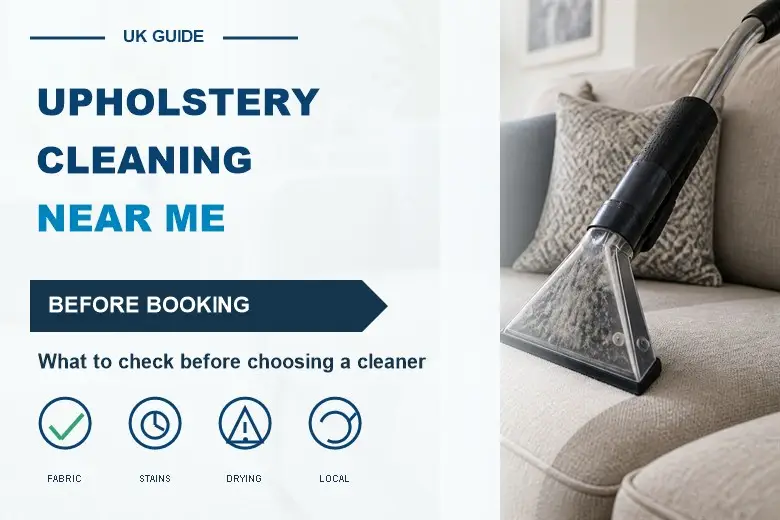
If you are searching for upholstery cleaning near me, it helps to know which items can be cleaned, what the cleaner should inspect and when a fabric item may need a more cautious approach. Upholstery cleaning can cover sofas, armchairs, dining chairs, office chairs, cushions, footstools, fabric headboards, benches and other suitable upholstered furniture.
This guide explains what professional upholstery cleaning may include, how different furniture types affect the cleaning method, what to ask before booking and how to prepare several items for one visit.
Professional upholstery cleaning may be suitable for sofas, armchairs, dining chairs, footstools, cushions and other fabric furniture. Suitability depends on the fabric, construction, filling, age, colour stability, existing damage, previous products, access and drying conditions.
For advice focused specifically on sofas, read our sofa cleaning near me guide. This page focuses on broader upholstery cleaning and how to arrange a multi-item visit for different furniture types around the home or workplace.
Upholstery cleaning is not limited to sofas. Many homes have several fabric items that collect body oils, dust, food marks, pet odours and everyday soil in different ways. A good upholstery cleaner should ask what items need cleaning and inspect each one before agreeing on the method.
This matters because a multi-item upholstery visit is not just the same clean repeated around the room. Dining-chair seats may be small but heavily marked by food and grease. A headboard may be lightly soiled but more moisture-sensitive because it sits against a wall. An office chair may have moving parts, foam and plastic fittings that need to be kept dry. Listing every item before booking helps the cleaner plan time, access, drying space and the safest cleaning order.
| Furniture item | Common issues | What should be checked |
|---|---|---|
| Armchairs | Body oils, headrest marks, food and drink spills | Fabric, arms, piping, cushions and wear |
| Dining chairs | Food, drink, grease and dye transfer | Seat fabric, backing, trims and colour stability |
| Office chairs | Body oils, dust and drink marks | Fabric type, foam, wheels and electronic parts |
| Footstools and ottomans | Foot traffic, spills and pet use | Fabric, internal construction and stains |
| Cushions | Food, makeup, pet odours and body oils | Removable covers, filling, zips and dyes |
| Fabric headboards | Hair oils, makeup and dust | Wall access, padding, colour and moisture sensitivity |
| Sofas and settees | Daily use, spills, oils and pet issues | Use the sofa-specific guide for detailed advice |
| Other upholstered furniture | Varies by item and construction | Inspection before agreeing to clean |
A professional upholstery cleaning service should begin with inspection. The cleaner may check fabric labels, colour stability, existing marks, wear, previous products, cushion construction, trims, buttons and access before deciding what is suitable.
Depending on the item, the process may include dry-soil removal, fabric testing where appropriate, stain assessment, method selection, controlled moisture, extraction or low-moisture cleaning and drying guidance. The method should be chosen after inspection because dining chairs, headboards, footstools and armchairs do not always respond like a standard sofa.
For example, a set of dining chairs may need attention to grease marks and dye transfer from clothing, while an armchair may need closer work on arms, headrests and cushion edges. Cushions with removable covers still need caution because the cover, filling, zip, lining and dyes may all behave differently. A careful cleaner should explain what will be cleaned, what will be avoided and what result is realistic for each item.
Furniture construction can change the cleaning risk. Fixed covers behave differently from removable covers. Foam filling, feather filling, piping, trims, buttons, glued components, wooden frames, metal parts, decorative stitching, fire labels and care labels can all influence what is safe.
This is where DIY cleaning and steam-cleaning shortcuts can be risky. Too much heat, moisture or rubbing can affect delicate fabric, loosen dyes, leave water marks or push moisture into filling. If fabric is unknown, worn, sun-faded or water-sensitive, the cleaner may recommend a lower-moisture method or a limited clean.
Construction also affects drying. A thin dining-chair seat may dry faster than a thick footstool or deep armchair cushion, even when cleaned during the same appointment. Headboards, benches and fixed cushions may have less airflow around them, so the technician’s drying advice should be specific to the item rather than a single generic time for everything.

Different upholstered items collect soil in different places. Dining chairs often have food, drink, grease and dye transfer from clothing. Armchairs commonly show body oils on arms and headrests. Office chairs can hold sweat, dust and drink marks, especially around seat edges and backs.
Fabric headboards often collect hair oils, makeup and dust, while footstools can be affected by footwear, pets and spills. Cushions may have pet odours, drinks, makeup or removable-cover issues. Old stains and odours cannot always be removed completely, especially if the fabric has already been treated with unsuitable products.
Some upholstered furniture is not suitable for a full clean. Severe fabric deterioration, loose or unstable dyes, sun fading, weak seams, damaged foam, water-sensitive materials, unidentified delicate fabrics, glued trims, unstable decorative elements and contamination below the surface can all change the advice.
After inspection, the cleaner may recommend a lower-moisture method, limited stain treatment, cleaning only part of the item, or declining the clean where the damage risk is too high. That is a responsible decision when restoration or replacement would be more appropriate than cleaning.
This is especially important with older furniture, sentimental items and pieces with mixed materials. A fabric bench with decorative studs, a headboard fixed close to a wall or a chair with fragile trims may still be cleanable, but the scope may need to be adjusted. Good advice before work starts is better than discovering a risk halfway through the clean.
Upholstery cleaning cost depends on the number of items, furniture type, size, fabric, loose cushions, stains, odours, parking, access and whether several items are cleaned during one visit. Dining chairs may be priced differently from armchairs, while footstools, cushions and headboards may need separate assessment.
For current pricing examples, view the Hobbs cleaning prices or send details through the contact page. Include photos, item counts and any known fabric labels so the quote is easier to assess.
Before booking upholstery cleaning, ask which furniture items are included and whether loose cushions are priced separately. Check whether backs, undersides, dining-chair seats, headboards, footstools or matching items are included in the quote.
It is also worth asking how the cleaner wants the items presented on arrival. Some chairs may need to stay around the table, while others may be easier to clean in a clear area with better airflow. If several items are being cleaned, ask whether they can all be used the same day or whether thicker cushions should be left longer before use.
Before the visit: Remove throws, toys, loose belongings and fragile items around the furniture. Tell the cleaner about every product previously used, including supermarket sprays, home remedies, deodorising products and machine-cleaning attempts. Provide parking and clear access where possible, and mention pets, children, allergies or known fabric issues.
After cleaning: Follow the technician’s drying advice. Keep safe airflow moving, avoid using damp upholstery, keep pets and children away until items are ready, and do not replace throws or covers while fabric is still damp. If unusual marks or odours appear during drying, contact the cleaner before applying another product.
Hobbs Cleaning Ltd helps with suitable upholstered furniture including armchairs, dining chairs, footstools, cushions, fabric headboards, office chairs and sofas. The team provides upholstery cleaning across Hemel Hempstead, Milton Keynes, St Albans, Hertfordshire, Aylesbury, and nearby areas.
If upholstery cleaning near me is your next step, list every item you want assessed so the visit can be planned properly. This is especially helpful when combining armchairs, dining chairs, cushions and footstools in one appointment.
Need Professional Upholstery Cleaning?
Hobbs Cleaning Ltd provides professional cleaning for sofas, armchairs, dining chairs, cushions, footstools and other suitable fabric furniture across Hemel Hempstead, Milton Keynes, St Albans, Hertfordshire and nearby areas.
An upholstery cleaner may be able to clean armchairs, dining chairs, office chairs, footstools, cushions, fabric headboards, benches, sofas and other suitable fabric furniture. Suitability depends on inspection.
Dining chairs can often be included, but they may be priced per chair. The cleaner should check fabric, backing, trims, colour stability and food or grease marks before cleaning.
Yes, several upholstery items can often be cleaned during one visit if access, drying conditions and fabric suitability are acceptable. Send photos and item counts before booking.
It can often improve stains and odours, but full removal is not guaranteed. Results depend on the fabric, age of the mark, depth of contamination and any previous products used.
Drying time depends on fabric, filling, item construction, airflow, room temperature and cleaning method. Thicker cushions and cooler rooms can take longer than simple dining-chair seats.
No. Steam or high moisture is not suitable for every fabric. Delicate, unstable, worn or water-sensitive materials should be inspected before any cleaning method is chosen.
Sources reviewed: National Carpet Cleaners Association FAQs, NCCA upholstery-cleaning guidance, and NCCA accidental-spill advice.