- 26/07/2026
- in Carpet Care Guides, Carpet Cleaning Tips
- by Hobbs Cleaning Ltd
- 111
- 0
Blog
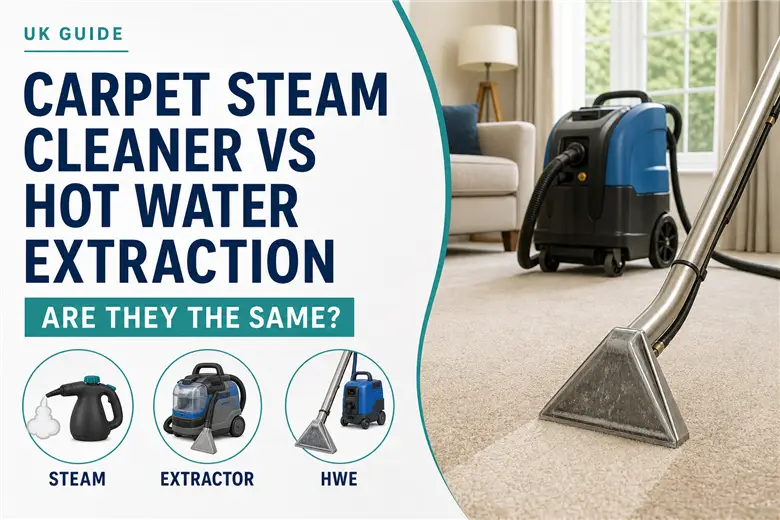
Carpet steam cleaner vs hot water extraction is a confusing search because people use the words in different ways. Some mean a true steam-vapour cleaner, some mean a domestic carpet extraction machine, and some mean professional hot water extraction. These are not always the same thing, and the difference matters if you are choosing how to clean a carpet safely.
This guide explains the terminology without repeating the broader wet-cleaning versus dry-cleaning debate. For a comparison with low-moisture methods, read our guide to steam cleaning versus dry carpet cleaning.
“Steam cleaning” is often used as another name for hot water extraction, but a true steam-vapour cleaner is not the same as a carpet extraction machine. Domestic carpet extractors and professional hot water extraction systems both apply moisture and recover dirty water, but they can differ significantly in equipment capability, preparation, rinsing, moisture recovery and operator technique.
The important question is not just whether a machine uses heat. It is whether it applies a suitable cleaning solution, agitates or loosens soil safely, recovers dirty moisture effectively and leaves the carpet able to dry within a sensible time.

Many homeowners say “steam clean the carpet” when they mean deep clean the carpet. The phrase is common, but it can hide different processes. A true steam cleaner creates vapour. A domestic carpet extractor sprays water and cleaning solution, then recovers some dirty liquid. Professional hot water extraction is a planned cleaning process using suitable chemistry, controlled application and stronger recovery equipment where appropriate.
This matters because the wrong assumption can lead to the wrong tool. A steam-vapour cleaner may refresh carpet fibres where the manufacturer permits it, but it does not usually flush and recover soil in the same way as an extraction machine. A domestic extractor can clean more than a vapour tool, but the result depends heavily on machine condition, technique, detergent use and drying control.
A true steam cleaner heats water into vapour and releases steam through a tool or attachment. On carpets, some manufacturers offer a carpet glider attachment for light refreshing, straightening fibres or helping the tool move over textile surfaces. This should not be confused with washing and extracting the carpet pile.
A steam-vapour tool normally does not inject cleaning solution into the pile and recover dirty water into a tank like a carpet extractor. It may help with light refreshing where permitted by the manufacturer, but it is not the same as flushing out soil, detergent residues or spill contamination.
Always check the manufacturer instructions and carpet care guidance before using steam on carpet. Heat and moisture can be unsuitable for some fibres, adhesives, backings or stain types.
A domestic carpet extraction machine applies water and cleaning solution to the carpet, then uses suction to recover some of the dirty liquid. These machines are often sold or hired as carpet cleaners, carpet washers, carpet shampooers or sometimes loosely called steam cleaners.
The key point is that many domestic carpet cleaners are not true steam cleaners. They usually rely on warm or hot tap water, cleaning formula, brushes and suction rather than actual steam. Results depend heavily on the machine, product dilution, preparation, cleaning pace, recovery passes and how quickly the room can dry afterwards.
Domestic extraction can make sense for small, low-risk household jobs, but it is not automatically suitable for wool-rich carpets, delicate fibres, old stains, pet contamination or already damp areas. If you are comparing hire machines, see the Hobbs guide to carpet cleaner rental costs.
Professional hot water extraction is a carpet cleaning process, not just a machine label. It may include inspection, suitable pre-treatment, dwell time, agitation where appropriate, controlled rinsing and extraction of soil and moisture. The process is commonly called steam cleaning, even though the main cleaning action is usually hot water, cleaning chemistry and recovery rather than literal steam.
Professional equipment can vary, so it is not accurate to say every professional clean is automatically superior in every case. Results depend heavily on equipment power, operator technique, preparation, moisture recovery and drying control. The value of a trained professional is the ability to assess the carpet, choose a suitable method and avoid pushing too much moisture or unsuitable chemistry into the fibres.
Hobbs Cleaning Ltd provides professional carpet cleaning using methods selected for the carpet, soil level and condition of the home.
The table below keeps the distinction simple. It does not claim that every professional system is always better or that every domestic machine leaves carpets wet. It shows the normal purpose of each system so you can understand what people mean when they say steam cleaner, carpet extractor or hot water extraction.
| System | How it works | Normal purpose |
|---|---|---|
| True steam-vapour cleaner | Uses heated vapour without full dirty-water extraction | Light refreshing where the manufacturer permits |
| Domestic carpet extractor | Applies water and solution, then recovers some dirty water | DIY carpet cleaning and small household jobs |
| Professional hot water extraction | Uses planned pre-treatment, agitation or dwell time, rinsing and stronger recovery equipment where suitable | Deeper professional carpet cleaning |
The best result depends on the carpet and the problem being cleaned. A true steam-vapour cleaner may refresh the look of fibres where the manufacturer permits it, but it is not normally the best choice for flushing out soil. A domestic carpet extractor can remove some soil and spill residue, but technique and moisture recovery matter a great deal.
Professional hot water extraction is often the stronger option for deeper soil because the cleaner can assess the fibre, pre-treat the carpet, agitate safely, rinse in a controlled way and recover moisture with appropriate equipment. That still does not mean every stain will disappear or every carpet should be cleaned the same way. A good cleaner should explain the likely result before starting.
If a carpet is delicate, heavily stained, affected by odour or slow to dry, the safest answer may be a different professional method, lower moisture, specialist stain work or advice not to proceed until the carpet has been inspected.
Drying is not controlled by machine type alone. It depends on carpet construction, how much solution is applied, how many extraction-only passes are made, room temperature, ventilation, air movement and operator technique. Professional extraction systems may include additional dry recovery passes, and air movers can sometimes be used to improve drying conditions.
True steam can be risky where heat is unsuitable. Domestic extraction can be risky where the user applies too much solution or does not recover enough moisture. Professional hot water extraction can also be unsuitable if the carpet is fragile, poorly fitted, already damp or likely to react badly to moisture. The method should fit the carpet, not the other way round.
For drying expectations after wet carpet cleaning, read the Hobbs guide on how long carpet cleaning takes to dry.
Professional carpet cleaning makes sense when you are unsure what the carpet is made from, the carpet has visible soil, stains or odour, or you want someone to choose a suitable process rather than relying on machine terminology. The important benefit is not simply “more heat”; it is inspection, method choice, controlled chemistry, recovery and practical drying advice.
Hobbs Cleaning Ltd helps customers compare options without pretending every carpet needs the same method. You can view carpet cleaning prices or contact Hobbs Cleaning Ltd for advice before booking.
Local help is available across Milton Keynes, St Albans, Hertfordshire, Aylesbury, Dunstable and Luton, Hemel Hempstead and nearby service areas.
Unsure Which Carpet Cleaning Method You Need?
Hobbs Cleaning Ltd can inspect your carpet and recommend hot water extraction, low-moisture cleaning or another suitable professional method.
View our carpet cleaning prices or contact Hobbs Cleaning Ltd for a quote.
Not always. “Steam cleaning” is often used as a name for hot water extraction, but a true steam-vapour cleaner is different from a carpet extraction machine that applies solution and recovers dirty water.
Usually the main process is hot water, suitable cleaning chemistry and extraction rather than literal steam. The phrase steam cleaning is common, but it can be technically imprecise.
It can improve some carpets, especially for small and low-risk household jobs. Results depend on machine condition, correct solution use, technique, moisture recovery and drying control.
Only use a true steam cleaner on carpet where the manufacturer and carpet care guidance permit it. Heat and moisture can be unsuitable for some fibres, backings or stain types.
The phrase is widely used by customers and the cleaning industry as a familiar name for deep wet extraction. Technically, professional hot water extraction usually relies on hot water, cleaning solution and recovery rather than steam vapour alone.
Book professional advice if the carpet is stained, odorous, delicate, wool-rich, slow to dry, heavily used or if you are unsure which method is suitable. The right process depends on the carpet, not just the machine name.
Sources reviewed: manufacturer guidance for steam-vapour and domestic extraction machines, Carpet and Rug Institute deep-cleaning guidance, and rental-machine operating guidance.