- 08/07/2026
- in Carpet Care Guides, Carpet Cleaning Tips
- by Hobbs Cleaning Ltd
- 140
- 0
Blog

If you are searching for sofa cleaning near me, the best service is not always the cheapest one. A reliable local sofa cleaner should inspect the fabric, check colour stability, ask about stains and odours, explain what the quote includes and give clear drying advice before choosing a cleaning method.
This guide explains what professional sofa cleaning includes, when DIY cleaning can be risky, how to compare quotes, what affects drying time and cost, and how to prepare your sofa before an appointment.
Choose a local sofa cleaner who inspects the fabric and colour stability, explains exactly what the quote includes, gives realistic expectations for stains and odours, and provides clear drying guidance. Professional cleaning is usually most suitable for daily-use sofas, delicate or unknown fabrics, pet odours, visible body-oil marks and sofas affected by unsuccessful DIY cleaning.
Professional-industry guidance supports inspecting upholstery and identifying possible problems before cleaning starts. That matters because two sofas that look similar can react very differently to moisture, heat, cleaning products and agitation.
Professional sofa cleaning normally starts with inspection. The cleaner should check the fabric label where available, cushion construction, arms, backs, headrests, seams, visible wear, odours, stains and any products already used. A careful visit should not begin with one method promised for every sofa.
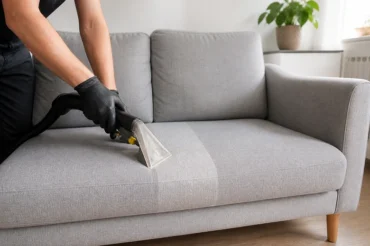
A professional upholstery cleaning service may include dry soil removal, suitable pre-treatment, gentle agitation, controlled extraction or low-moisture cleaning, stain advice and drying guidance. The exact process should match the fabric because delicate upholstery, loose dyes, pile fabrics and older materials may need a different approach.
Why fabric inspection matters: Some fabrics can tolerate more moisture than others. Velvet, viscose blends, linen, wool-rich upholstery, older covers and pale sofas often need extra caution. Safe sofa cleaning starts with identifying the fabric and choosing the method from the evidence, not from habit.
A good sofa cleaning company should explain what is included, what is uncertain and how long the sofa is likely to take to dry. Look for a local sofa cleaner who gives realistic advice rather than promising that every stain will disappear.
For guidance covering armchairs, dining chairs, cushions, footstools and other fabric furniture, read our upholstery cleaning near me guide.
When contacting a local sofa cleaner, provide details about the fabric, stains, pets, children, parking and access. This helps the cleaner assess the job and explain what may be suitable before the appointment.
Ask whether cushions, arms, backs, scatter cushions and matching chairs are included in the quote. Also ask about drying time, stain expectations, pet odours, fabric checks and whether parking or access affects the appointment.
| What to check | Good sign | Warning sign |
|---|---|---|
| Fabric assessment | Cleaner asks about material, label and previous treatments | One method promised for every sofa |
| Quote coverage | Arms, backs, cushions and matching items are clearly listed | Unclear price with unspecified extras |
| Stain expectations | Realistic explanation before work begins | Every stain is guaranteed to disappear |
| Odour treatment | Source and cushion depth are discussed | A fragrance is presented as odour removal |
| Cleaning method | Method is selected after inspection | “Steam cleaning” offered without checking fabric |
| Drying | Estimated range and ventilation advice are provided | No drying guidance |
| Access | Parking, furniture access and room use are discussed | Additional charges appear only after arrival |
DIY sofa cleaning can help with small, fresh, low-risk marks if the fabric is suitable and you use very little moisture. It becomes risky when the sofa has unknown stains, pet smells, delicate fabric, colour change, water marks, heavy use or previous unsuccessful cleaning attempts.
Whether you call it a sofa, settee or couch, do not apply strong cleaning products when you are unsure of the fabric. Check the care label and ask for professional advice before adding moisture.
Common DIY mistakes include overwetting, vigorous scrubbing, using unsuitable detergents, mixing products, applying cleaning solution directly to fabric and trying to treat a visible stain before understanding the material. These mistakes can cause water marks, shrinkage, colour movement, texture change, residue or longer drying times.

Velvet, chenille, viscose blends, linen, cotton, wool-rich upholstery, older fabrics, pale sofas and loose-weave materials often need extra care. Some fabrics hold more moisture, some mark easily and some can change texture if rubbed or cleaned too aggressively.
If the sofa has no visible care label, treat it cautiously. A professional sofa cleaner should inspect the fabric, test where appropriate and explain if a lower-moisture method or limited clean is safer than a full wet clean.
Sofa cleaning can often improve food marks, drink spills, pet smells, body oils and general daily-use odours. Results depend on the fabric, stain age, what caused the mark, how deeply it has travelled and what products have already been used.
Pet odours may need more careful assessment because odour can sit deeper in cushions, seams or filling. A fragrance should not be presented as odour removal. A professional should discuss the likely source of the smell and explain what is realistic before starting.
Sofa drying time depends on fabric type, airflow, room temperature, cleaning method, cushion thickness and how much moisture is used. Some sofas dry within a few hours, while thicker cushions, cooler rooms and moisture-sensitive fabrics can take longer.
Good ventilation helps, but drying should still be controlled. Over-wetting can contribute to water marks, shrinkage, odours and prolonged drying, so a careful cleaner should use a method that suits the fabric and room conditions.
Sofa cleaning prices depend on sofa size, fabric, stains, odours, number of cushions, access and whether matching upholstery is included. The cheapest quote is not always the best value if it does not include fabric checks, realistic stain advice or clear drying guidance.
For current prices, check the Hobbs cleaning prices or ask for a quote. Give as much detail as possible about sofa size, fabric, stains and access so the quote is easier to understand.
Before the appointment, remove throws, toys, blankets, loose belongings and personal items from the sofa. Tell the cleaner about every product previously used, including supermarket sprays, home remedies, deodorising sprays and machine cleaning attempts.
Provide parking and clear access where possible. Mention pets, children, allergies, known fabric issues and whether the sofa has loose cushions, fixed cushions or delicate trim. Ask whether loose cushions should remain in place or be removed before the cleaner arrives.
Do not apply another cleaning product immediately before the visit. Fresh product can react with professional solutions, hide the original issue or make fabric testing less reliable.
Follow the technician’s drying advice. Maintain safe airflow where possible, avoid sitting on damp upholstery and keep pets and children away until the sofa is ready to use.
Do not replace throws, cushion covers or blankets while the fabric is still damp because this can slow drying and may transfer colour or odour. If unusual marks, odours or texture changes appear during drying, contact the cleaner rather than applying another product yourself.
Contact a professional sofa cleaner when the sofa is used daily, has pet odours, visible stains, headrest marks, armrest soil, sticky residue or delicate fabric. Professional help is also sensible before guests, after a tenancy, or when DIY cleaning has already made a mark worse.
Hobbs Cleaning Ltd helps homeowners with sofa and upholstery cleaning across Hemel Hempstead, Milton Keynes, St Albans, Hertfordshire, Aylesbury, and nearby areas.
If sofa cleaning near me is your next step, choose a sofa cleaning company that checks the fabric, explains what is included and gives realistic expectations. Avoid booking only on price if the sofa is delicate, stained or used every day.
Need Professional Sofa Cleaning?
Hobbs Cleaning Ltd provides professional sofa and upholstery cleaning for homes across Hemel Hempstead, Milton Keynes, St Albans, Hertfordshire and nearby areas. If your sofa has stains, odours or daily-use marks, our team can help you choose an appropriate cleaning approach.
Choose a local sofa cleaner who asks about fabric type, stains, odours, pets, drying and access before giving advice. The best sofa cleaning service should explain what is included and what result is realistic.
Ask whether cushions, arms, backs and extra chairs are included in the quote. You should also ask about drying time, stain expectations, fabric checks and whether pet smells can be treated.
Yes, a sofa steam cleaner can damage some fabrics if too much heat or moisture is used. Delicate upholstery, loose dyes and older fabrics need careful inspection before cleaning.
Drying time depends on fabric, airflow, room temperature and cleaning method. Some sofas dry within a few hours, while thicker cushions or cooler rooms may take longer.
Daily-use sofas, family sofas and homes with pets or children usually need cleaning more often than a spare-room sofa. The right timing depends on use, visible marks, odours and fabric condition rather than a fixed rule.
Avoid strong DIY products before booking a professional because they can change colour, leave residue or make stains harder to treat. Light blotting of fresh spills is sensible, but do not overwet the fabric. If you are arranging sofa cleaning near me, tell the cleaner exactly what has already been used.
Sources reviewed: National Carpet Cleaners Association FAQs, NCCA upholstery-cleaning guidance, and NCCA accidental-spill advice.