- 08/08/2026
- in Carpet Care Guides, Carpet Cleaning Tips
- by Hobbs Cleaning Ltd
- 141
- 0
Blog
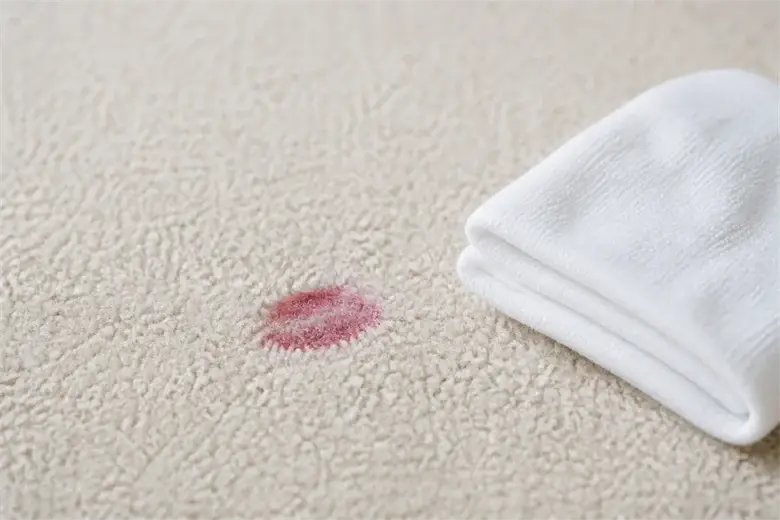
Lipstick can often be improved or removed from carpet if you treat it carefully, but rubbing, heat and too much product can spread oily colour deeper into the fibres. If you need to know how to clean lipstick off carpet, start by lifting any excess gently, blotting rather than scrubbing and checking the carpet’s care guidance before applying any cleaning product.
Lipstick is not quite the same as a tea, juice or muddy-water mark. Many lipsticks contain some mix of oils, waxes, pigments, emollients and colourants, so the stain can behave like both an oily mark and a strong dye stain. That is why pouring on water or repeatedly rubbing with a cloth can make the area larger without properly removing the residue.
If you need a quick process, work through the stain in this order:
If you want a broader overview of general carpet stain removal, Hobbs already has a wider guide. This article stays focused on lipstick because its oily and pigmented residue needs a more specific approach.
Lipstick is awkward because it may leave behind both colour and residue. The colour can cling to the carpet fibres while the oily or waxy part can smear when it is warmed, pressed or overworked. That is why a lipstick mark may look lighter after treatment but still feel slightly greasy or shadowy if product remains in the pile.
Rubbing tends to spread the colour outward. Pressure can push softened lipstick lower into the fibres. Repeated cleaning product can add residue of its own. Delicate or absorbent fibres may also react differently from hard-wearing synthetics, so the safest method is controlled, gradual cleaning rather than aggressive attack.
If the lipstick has only just landed, the first job is to stop it spreading. Do not kneel on it, wipe across it or drag a cloth from side to side. If there is a visible solid or creamy deposit, lift that first. A spoon, plastic card or other blunt edge can help, but only if you use it gently and keep the movement upwards rather than scraping across the carpet.
Once the excess is lifted, blot with a clean white cloth or plain paper towel. Press lightly to pick up loose material. Keep turning to a clean part of the cloth so you do not reapply what you have just removed.
Fresh lipstick is usually easier than a dried mark because you still have a chance to remove some of the material before it settles. After lifting the excess and blotting, check whether you know the carpet type. If the carpet is wool, a wool blend or an unknown delicate fibre, slow down and be more cautious with products and moisture.
If the carpet instructions allow stain treatment, test a carpet-safe or fabric-safe product in an inconspicuous area first. Use it according to its label rather than improvising. Apply the product to a cloth or use a controlled amount in the way the label directs, then work gently from the outer edge of the lipstick mark towards the centre. That helps reduce the risk of spreading the stain further across the carpet.
Blot as the stain loosens. Do not flood the area, and do not assume that stronger product or more repeated passes will automatically improve the result. Once the mark has improved as far as it reasonably will, blot away remaining residue and let the area dry before reassessing.

Dried lipstick usually needs more patience because the waxy or oily part may have hardened while the pigment remains in the fibre. Start by lifting any crusted material carefully rather than trying to scrub the whole mark at once. A dried lipstick stain may break up into surface residue and a remaining colour shadow underneath.
Previous cleaning attempts make a difference too. If the area has already been rubbed, heavily wetted or treated with several products, the fibres may now hold both lipstick residue and cleaning residue. In that situation, repeating the same process more aggressively can be counterproductive.
Old or dried lipstick can often improve, but it is not responsible to promise full removal. The final result depends on the carpet fibre, how much lipstick was pressed in, how long it has been there and what has already been applied.
Water alone is not usually the best answer for lipstick. It may help with blotting residue from a suitable cleaning product, but it often does not deal effectively with oily or waxy material by itself. In some cases, adding too much plain water can simply spread the mark or leave the carpet wetter than necessary.
That does not mean you should jump straight to strong solvents or household chemistry. It means you need the right product for the carpet and the stain, used carefully and according to the label.
Be careful with washing-up liquid. People often reach for it because lipstick has oily elements, but carpet is harder to rinse than crockery. Too much washing-up liquid can foam heavily, leave sticky residue, attract soil later and lead to overwetting from repeated rinsing.
If you are unsure what product is actually appropriate, Hobbs has a separate guide to suitable carpet cleaning products. That page is the better place for product-selection detail, while this article stays focused on safe lipstick-stain treatment.
This needs caution. Some stain-removal products use solvent-based chemistry because lipstick can contain oily or waxy components, but one carpet does not behave exactly like another. Fibres, dyes, backing and adhesives vary, so a product that works well on one stain may risk colour loss, texture change, dye movement or backing problems on another.
That is why testing first matters. Follow the product label and the carpet manufacturer’s guidance. On a valuable carpet, a wool carpet or an unknown fibre, professional assessment may be safer than experimenting with solvent-based products at home.
No. Household bleach is not a general lipstick-stain treatment for carpet. It can create colour loss, fibre damage and a much bigger permanent problem than the original mark. Hobbs has a dedicated guide on whether bleach can be used on carpet, and the short version is that it should not be treated as a standard stain-removal solution.
Wool needs a more careful approach. It can react differently from many synthetic carpets, and the wrong product or too much moisture can make a small lipstick stain much harder to deal with. If you suspect the carpet is wool or a wool blend, check the manufacturer’s care instructions, think about colourfastness and use only products that are clearly suitable for that fibre.
Do not assume that every online carpet-stain tip applies to wool. If the carpet is expensive, delicate or partly unknown, it is often better to stop after basic excess removal and get informed advice.
If someone has already scrubbed the stain, spread it, poured on detergent or used several products, the best next move is often to stop and reassess rather than keep changing tactics. The carpet may now contain lipstick, moisture, foam, detergent or disturbed dye all at once.
At that point, note what has already been used. If professional carpet cleaning is later booked, telling the technician which products have been applied can help them judge the stain more accurately.
An older stain may still improve, but age matters. The pigments may have had more time to settle, the waxy part may have hardened and previous partial cleaning may have left a faded outline or residue. Older lipstick on carpet is often more about controlled improvement than instant removal.
If the mark has been there for days, keep expectations realistic and avoid cycling through different cleaners in frustration. Repeated experiments can make later treatment less predictable.
Many of these problems overlap with the wider carpet-care issues Hobbs covers in its article on common carpet care mistakes. The lipstick-specific risk is that rubbing and over-product use can spread both oily residue and colour at the same time.
Lipstick can behave differently from foundation, mascara, eyeliner or loose powder because different cosmetics use different formulations. Some are more oily, some are more waxy and some are more powdery. That is why a method that helps with one type of makeup stain is not automatically the right answer for lipstick.
Professional help may be the better option where the carpet is valuable, the fibre is wool or unknown, the stain is large, the lipstick has been deeply smeared, several DIY products have already been used or the colour appears to be transferring. It can also be sensible when the stain is old and careful treatment has not taken it far enough.
Hobbs Cleaning Ltd handles professional residential carpet cleaning across Hemel Hempstead and its established surrounding service area, including places such as Berkhamsted, Tring, St Albans, Harpenden and Milton Keynes. For service details, current carpet-cleaning prices or to discuss a stubborn stain, you can contact Hobbs Cleaning Ltd.
If you are weighing up whether careful DIY treatment is enough or whether the risk of damage is too high, Hobbs also explains why professional carpet cleaning is worth it. If the lipstick stain is part of a wider move-out clean, the end of tenancy carpet cleaning checklist is also useful.
| Situation | DIY Treatment May Be Reasonable | Professional Help May Be Better |
|---|---|---|
| Fresh small stain | Yes, if excess can be lifted quickly and the carpet is suitable. | Not always necessary unless the carpet is delicate or expensive. |
| Old dried lipstick | Sometimes, with careful expectations and gentle treatment. | Often useful if the stain is set, smeared or repeatedly treated. |
| Unknown carpet fibre | Only basic excess removal and very cautious testing. | Safer where product suitability is unclear. |
| Wool carpet | Possible only with careful product choice and minimal moisture. | Often the safer route for valuable or delicate wool carpets. |
| Large smeared stain | Limited, especially if spreading continues. | Usually more sensible than repeated home experiments. |
| Several DIY chemicals already used | Best to stop and reassess rather than keep trying more products. | Yes, because residue and fibre response may now be more complex. |
| Colour beginning to transfer | Stop aggressive treatment. | Safer to avoid worsening dye movement. |
| Valuable carpet | Only low-risk first steps such as lifting excess and gentle blotting. | Often worth it to reduce the risk of accidental damage. |
Need Help With a Stubborn Lipstick Mark?
If the stain has spread, the carpet is delicate or several DIY products have already been used, Hobbs Cleaning Ltd can assess whether professional stain treatment is the safer next step.
Often yes, at least to some degree, if it is treated carefully and early. Full removal cannot be guaranteed because lipstick can leave both oily residue and strong colour.
Lift any excess first, blot rather than rub, test a suitable carpet-safe product and work gently from the outside of the mark towards the centre.
Lift any hardened residue gently, then treat the remaining mark patiently. Dried lipstick usually needs a more careful and realistic approach than a fresh stain.
Usually not by itself. Water may help with blotting or removing product residue, but lipstick often has oily or waxy elements that plain water does not address well.
Be careful. Too much washing-up liquid can foam heavily, leave residue and encourage overwetting if you keep rinsing the area.
Only with caution and only if the product is suitable for the carpet. Some solvent-based stain products can help with oily marks, but testing first is essential.
No. Household bleach should not be used as a general lipstick-stain treatment on carpet.
It can, especially if the pigment bonds strongly with the fibres or the stain is rubbed, heated or repeatedly over-treated.
Professional treatment may improve a lipstick stain where DIY options are limited, especially on delicate, old or heavily spread marks, but no responsible cleaner should promise full removal before inspection.