- 28/07/2026
- in Carpet Care Guides, Carpet Cleaning Tips
- by Hobbs Cleaning Ltd
- 240
- 0
Blog
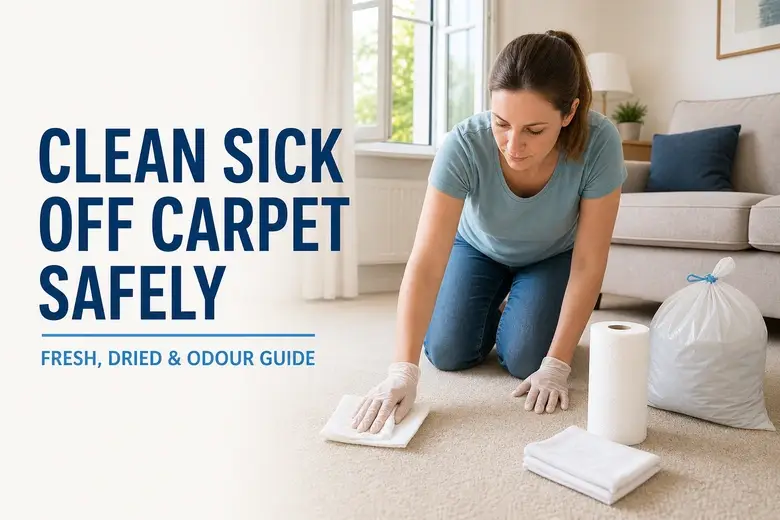
If you need to know how to clean sick off carpet, put on disposable gloves, keep children and pets away, remove solid matter carefully, blot excess moisture, use a suitable carpet-safe treatment sparingly, blot rather than scrub, and dry the area fully. Stop if colour changes, fibres distort, blood is visible, or contamination appears to have reached below the fibres.
The safest method depends on whether the sick is fresh or dried, the carpet fibre, the accident size and whether odour remains. A small fresh mark on synthetic carpet is usually easier to manage than dried vomit on carpet, wool, silk, a large area or contamination below the fibres.
Remove sick from carpet by wearing gloves, lifting solids gently, sealing waste, blotting liquid with disposable kitchen roll, and treating the area with a carpet-safe product used as directed. Use cool or lukewarm water only where instructions allow it, then blot dry. Do not scrub, soak, mix chemicals or use bleach on carpet.
Gather everything before you begin so you are not walking through the room.
White cloths show whether colour is transferring from the carpet or the stain. If the cloth picks up carpet dye, stop using the product and seek advice.
Cleaning sick from carpet involves both hygiene and fibre care. A product that is suitable for a hard surface may be too strong for carpet fibres, dyes, backing or underlay.
If an infectious stomach bug may be involved, prioritise personal hygiene, product instructions and professional advice. Do not experiment with several chemicals on the same stain.
Fresh vomit on carpet needs careful action. Work calmly and avoid pressing material into the pile.

Dried vomit is harder to remove because it can attach to fibres and release odour when lightly dampened. Loosen and lift residue gradually, without re-soaking the carpet.
If the dried mark has been there for some time, there may already be colour change or residue below the visible pile. Results should be assessed carefully before more liquid is added.
The table below is a practical guide, not a diagnosis. Fibre, dye stability, previous products and contamination depth all affect the result.
| What you notice | Possible explanation | Sensible next step | When to call a professional |
|---|---|---|---|
| Light surface mark | Residue may still be sitting in the pile | Blot gently with a suitable product | If the mark remains after drying |
| Yellow or brown discolouration | Dye, bile or fibre reaction could be involved | Stop repeated treatment | If colour is changing or spreading |
| Sour smell | Organic residue may remain deeper in the pile | Dry fully and ventilate | If the smell stays localised |
| Smell returns after drying | Backing or underlay contamination may be present | Avoid more sprays | If odour keeps returning |
| Sticky or stiff carpet | Product residue may be left in the fibres | Do not add more detergent | If residue remains after drying |
| Pale or bleached-looking patch | Colour loss or chemical damage could have occurred | Stop cleaning immediately | Before applying any more product |
| Ring appears around the treated area | Moisture or soil may have moved outwards | Let it dry and avoid soaking | If the ring remains visible |
| Smell or moisture seems below the carpet | Backing, underlay or subfloor may be affected | Stop DIY wet treatment | Arrange assessment promptly |
If you are wondering how to get sick smell out of carpet, start by making sure the affected area is fully dry. Odour can remain when organic residue reaches the deeper pile, backing, underlay or subfloor.
Fragrance may make the room smell better for a short time, but it can mask the source rather than remove it. Repeated sprays can also add residue, increase moisture and make the carpet feel sticky.
Use airflow, keep the area clear and avoid repeated wet treatment. If the smell appears or returns after cleaning the affected area, the Hobbs guide on why carpet can smell after cleaning explains how moisture, residue and older contamination can affect odours after treatment.
Online guides often recommend vinegar, bicarbonate of soda or disinfectant for vomit on carpet, but those suggestions are not safe for every carpet. Results depend on the fibre, dyes, backing and products already used.
Vinegar can affect some materials and may leave moisture behind if too much is applied. Bicarbonate of soda should not be vacuumed while wet because it can clump and leave residue. Disinfectants may not be colour-safe or fibre-safe, even if they are suitable for hard surfaces.
Do not mix products. Do not use bleach directly on carpet. Do not keep trying different remedies if the stain, smell, colour or texture is getting worse. Follow the label on any carpet-safe product and test in a hidden area first.
Pet sick on carpet and human sick both need prompt removal, gloves, careful blotting and controlled drying. The carpet-cleaning approach is similar, but pet sick can contain food dyes, bile, hair, medication residue, grass or other material that may affect staining and odour.
This article does not give veterinary or medical advice. If a pet is repeatedly sick, speak to a vet. From a carpet point of view, repeated accidents in the same area increase the chance of residue reaching the backing or underlay.
Stop and consider professional assessment if any of the following apply:
If blood is visible in the vomit, avoid DIY stain treatment and seek appropriate professional advice rather than applying more carpet-cleaning products.
A professional carpet cleaning service may improve vomit stains and odours, but the result depends on the source and the carpet. A professional cleaner can assess the fibre, stain age, previous treatments, colour change, remaining organic contamination, and possible moisture in the backing or underlay.
Where suitable, controlled rinsing and extraction can help remove residue more effectively than repeated blotting at home. If colour damage has already occurred, or contamination has reached the underlay, cleaning alone may not fully remove the mark or smell.
For wider stain advice that is not specific to sick or vomit, see the Hobbs guide on how to remove stains from carpet.
In a rental property, act promptly and avoid hiding the problem with fragrance. Photograph the area where appropriate, keep the name of any product used, and allow enough drying time before moving furniture back or inspecting the final result.
If staining or odour remains before checkout, professional help may be sensible. Hobbs also has an end of tenancy carpet cleaning guide for tenants and landlords who need a cleaner, better-documented handover.
Hobbs Cleaning Ltd helps homeowners with carpet stains, odours and professional carpet cleaning across Hemel Hempstead, Milton Keynes, St Albans, Hertfordshire, Aylesbury, Dunstable and Luton, and nearby areas.
If a sick stain or smell remains after careful blotting and drying, Hobbs can assess the carpet fibre, products already used and whether contamination may have reached below the visible pile. You can view carpet cleaning prices or contact Hobbs Cleaning Ltd for advice and a quote.
If the accident is faeces rather than vomit, use the dedicated guide on how to get poop out of carpet safely.
Sick Stain or Smell Still Remaining?
Hobbs Cleaning Ltd can assess the carpet fibre, stain history, products used and whether contamination may have reached the backing or underlay before recommending the next step.
View Carpet Cleaning Services | View Prices | Request a Free Quote
The fastest safe way to clean sick off carpet is to wear gloves, lift solids carefully, seal the waste, blot moisture with kitchen roll and treat the mark with a suitable carpet-safe product. Work from the outside towards the centre and do not scrub. Dry the area fully before judging the final stain or smell.
Remove dried vomit from carpet by gently lifting loose material first, then softening only the remaining residue with a small amount of suitable product or moisture. Blot and lift gradually rather than scraping hard or soaking the carpet. Stop if the fibres distort, colour transfers to the cloth, or the stain spreads.
To get the smell of sick out of carpet, remove as much residue as possible, blot carefully and let the area dry with airflow. Avoid covering the smell with fragrance or repeated sprays. If odour returns after drying, residue may be deeper in the pile, backing or underlay.
Vinegar is not a universal solution for vomit on carpet. Some carpets, dyes and backings can react badly, and too much liquid can push contamination deeper. If you use any product, follow its label and test a hidden area first. Do not mix vinegar with bleach, disinfectant or other cleaning chemicals.
Yes, vomit can permanently stain carpet in some cases, especially if it contains dyes, bile or acidic residue, or if it sits on the carpet for too long. Fibre type, previous products and colour stability also matter. Professional cleaning may improve the result, but some marks or colour changes may remain.
Call a professional carpet cleaner if the affected area is large, the carpet is delicate, colour transfers, smell remains after drying, the stain keeps returning, or you suspect the backing or underlay is affected. You should also stop DIY cleaning if blood is visible, several products have been used, or you cannot clean the area safely.
Hygiene source reviewed: The personal-hygiene and bodily-fluid handling advice in this guide was checked against official GOV.UK infection-control guidance.