- 03/08/2026
- in Carpet Care Guides, Carpet Cleaning Tips
- by Ben Hobbs
- 13
- 0
Blog
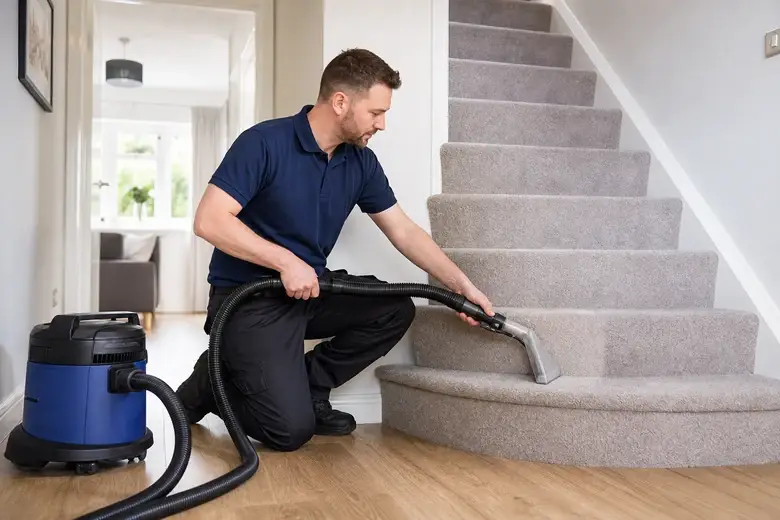
The safest way to clean carpet on stairs is to remove loose soil, treat marks carefully, use controlled moisture, clean with suitable equipment, extract as much moisture as possible and keep the stairs out of use until dry. Full-size machines, excess water and trailing cables can make stair cleaning difficult or unsafe.
Carpeted stairs need a different approach from flat rooms because treads, risers, corners, nosing and landing edges collect soil differently. This guide explains practical DIY steps, equipment limitations, drying risks and when professional help from Hobbs Cleaning Ltd may be more suitable.

The best way to clean carpet on stairs is to combine dry soil removal, targeted stain treatment, controlled moisture and safe access planning. The right approach depends on carpet fibre, condition, soil level, stains, equipment, stair shape, access and whether a safe dry route can be maintained.
A sensible process is to inspect the carpet, clear the stairway, vacuum, treat marks, test products, use controlled moisture, extract well, ventilate and prevent access until dry. If the stairs are heavily soiled or part of a hall, stairs and landing clean, it may be more practical to ask about professional carpet cleaning.
Carpet cleaning on stairs is more difficult because the working area is narrow, uneven and used for access while the carpet is cleaned and dried. A stair tread, riser and nosing do not behave like one flat surface.
Stairs have vertical risers, exposed edges, dusty corners, heavy traffic and uneven wear. The nosing often shows dark marks because feet pivot there and fibres become crushed.
Equipment creates another problem. Hoses and cables can become trip hazards, full-size machines are awkward to move, and wet stairs can block access. Moisture can collect around edges and joins, so controlled drying matters.
This table gives a quick decision guide. The safest option depends on the carpet, stair layout and access needs.
| Situation | Recommended first step | Main risk | When professional help may be better |
|---|---|---|---|
| Light dust and loose soil | Vacuum treads, risers, edges and landing first. | Adding moisture before dry soil is removed. | If soil remains compacted around edges. |
| Dark traffic marks | Vacuum thoroughly, then assess whether marks are soil or wear. | Assuming all dark areas are removable dirt. | If fibres look crushed or permanently changed. |
| Individual stains | Blot and test a suitable spot treatment first. | Rubbing stains into stair edges. | If colour transfers or texture changes. |
| Full stair carpet cleaning | Plan sequence, access, cables, ventilation and drying. | Wet stairs becoming unsafe to use. | If there is no safe dry route. |
| Wool or delicate stair carpet | Identify fibre and test carefully before treatment. | Excess moisture, heat or strong chemistry. | If fibre or dye stability is uncertain. |
| Recently fitted carpet | Check fitting, joins, edges and care guidance. | Disturbing edges or joins. | If carpet feels loose or moves underfoot. |
| Stairs needed for constant access | Plan a safe route before any moisture is used. | Someone walking on damp stairs. | If children, older people or limited mobility are involved. |
| Carpet remains damp or smells after cleaning | Increase airflow and stop adding more product. | Overwetting or residue. | If dampness or odour remains localised. |
Before cleaning carpeted stairs, gather tools that let you work carefully without blocking access. You do not need a specific brand, but you do need equipment that suits stairs.
Clean white towels show whether colour is transferring. Good lighting helps reveal soil around stair edges.
Prepare carpeted stairs by clearing the route, checking for damage and planning safe access while you work.
Remove shoes, objects and clutter. Secure or remove loose stair runners where appropriate. Check carpet edges, joins, grippers and any areas where the carpet feels loose. Inspect for worn nosing, stains and flattened fibres.
Check the carpet fibre where possible and test products in a hidden area. Plan a safe route, keep children and pets away, and keep cables away from walkways. Do not begin if the only exit requires walking on wet stairs.
Important safety note: Never position equipment, hoses or electrical cables where they could cause someone to fall.
Vacuum carpeted stairs before moisture is added because dry soil can turn muddy once wet. Vacuuming alone does not deep-clean stair carpet, but it is the foundation for safer cleaning.
Vacuum the landing first. Clean each tread, then the riser, then the nosing. Use a crevice tool along edges and corners where dust and grit collect. Repeat passes on high-traffic areas without forcing the tool into the pile.
Remove pet hair before wet cleaning. If the carpet has loose edges, damaged joins or fraying, avoid aggressive brushing.
Treat stains on carpeted stairs before full cleaning by identifying the likely mark, testing the product and blotting rather than rubbing. Hard scrubbing near edges or nosing can distort fibres.
Blot fresh liquid with clean white towels. Work from the outside of the mark towards the centre. Use only a suitable carpet-safe product, follow the instructions and avoid soaking the stair edge. Stop if colour transfers, texture changes or the mark grows.
Do not combine products. For a specific spill, food mark or unknown stain, use the Hobbs guide to removing stains from carpet.
To clean carpet on stairs safely, work in controlled sections and plan around stable footing, a dry working position and a safe exit route.
Plan the sequence so the person cleaning does not need to cross freshly cleaned steps. If that is not possible, professional stair carpet cleaning may be the safer approach.
You can use a carpet cleaner for stairs only when the equipment suits stair work and can be operated safely. Some machines include stair or upholstery attachments, but full-size floor heads may not fit stair treads safely.
A carpet washer for stairs should be used with the main machine on a stable, level surface. Hoses must not create a trip hazard, and the machine should not be carried on the stairs while full. A handheld carpet washer may be easier to position, but small machines can have limited extraction power.
Too much cleaning solution can leave stairs overly wet. Multiple dry extraction passes are important, and the machine cannot identify carpet fibre, colour stability, loose fitting or existing damage. For wider context, read Hobbs Cleaning Ltd’s guide to carpet cleaner hire vs professional carpet cleaning.
You can shampoo carpeted stairs only with controlled moisture, suitable products and proper extraction. On stairs, excess product can collect around edges and take longer to dry.
Too much shampoo can leave residue that attracts soil, especially on high-traffic treads and nosing. Product instructions must be followed, and wool or delicate carpets need extra caution. Extraction and drying matter because residue and damp edges can leave the carpet sticky.
If residue is a concern, read the Hobbs guide on whether you have to rinse carpet after shampooing.
Stair edges, corners and nosing need separate attention because each area collects soil and wears differently. A visible dark edge is not always a removable stain.
Treads:
Treads receive direct foot traffic and often show dark lanes. Vacuum slowly, treat visible soil sparingly and avoid heavy scrubbing in worn traffic paths. Some dark lanes are caused by crushed fibres rather than removable dirt.
Risers:
Risers receive scuffs, dust and marks from shoes. They may need controlled hand-tool work because they are vertical and easy to overwet. Work carefully around the join between tread and riser.
Nosing and edges:
Nosing and edges can hold compacted soil but can also be damaged by aggressive brushing. They may remain wetter because carpet wraps around the stair shape. Dark areas may involve wear, filtration soil, crushed fibres or permanent colour change.
Avoid anything that makes stair carpet unsafe, overwet or damaged. Common DIY problems come from too much water, the wrong product or poor access planning.
For more general prevention advice, see the Hobbs guide to common carpet-care mistakes.
Wool or delicate stair carpet should be cleaned with fibre identification, colour testing, controlled moisture, lower agitation and careful drying. Wool, wool blends, natural fibres, older carpet, pale carpet and uncertain dye stability all need caution.
Do not assume every wool carpet needs one method. The correct approach depends on construction, backing, previous treatments, soil level and condition around edges and joins. High heat, strong alkalinity and aggressive brushing can create risk.
If the fibre is uncertain or the carpet already shows wear, ask for advice before using a stair-cleaning machine or shampoo treatment.
Carpet on stairs takes longer or shorter to dry depending on fibre, pile thickness, amount of moisture, extraction power, number of dry passes, airflow, temperature, humidity and stair construction. There is no single guaranteed drying time.
Stairs should remain out of use until they are dry and safe to walk on. Walking too early may flatten fibres or transfer soil. Improve airflow, but do not cover damp stairs before they are dry.
For a fuller explanation of drying factors, read the Hobbs guide on how long carpet cleaning takes to dry.
Professional stair carpet cleaning is better when stairs are heavily soiled, difficult to access safely or likely to need stronger extraction than a small domestic tool can provide. This is especially true for full hall, stairs and landing cleaning.
Examples include heavy dark traffic lanes, multiple stained steps, pet odours, wool or delicate carpet, loose carpet or damaged edges, no safe way to position DIY equipment, weak extraction, and stairs needed by children, older people or residents with limited mobility.
Professional help can also be sensible when products have left residue, the carpet remains wet or smells after DIY cleaning, or a more consistent result is needed before moving house or an inspection. Professional equipment cannot reverse permanent wear or fibre damage.
The cost of professional stair carpet cleaning depends on the staircase and the work required. For current charges, always check the main carpet-cleaning prices page.
Cost may depend on the number of steps, whether risers are carpeted, staircase width and shape, landings, carpet condition, stains, access, other rooms cleaned at the same appointment and protection treatment.
For wider context on professional carpet-cleaning cost factors, see Hobbs Cleaning Ltd’s guide to how much professional carpet cleaning costs.
Hobbs Cleaning Ltd provides carpet cleaning for halls, stairs, landings and other carpeted areas across Hemel Hempstead, St Albans, Milton Keynes, Hertfordshire and nearby service areas.
Professional cleaning can help where stair traffic marks, landings and hallway soil need to be treated together. Carpet condition, edges, stains and drying access all affect the best approach.
Are your carpeted stairs showing dark traffic marks, stains or uneven soiling? Hobbs Cleaning Ltd can assess your hall, stairs and landing and explain the most suitable cleaning approach. View current carpet-cleaning prices or request a quote.
The best way is to vacuum thoroughly, treat individual marks, use controlled moisture, extract as much moisture as possible and keep the stairs out of use until dry. The sequence should protect footing, cable position and access, not simply copy how a flat room is cleaned.
Yes, you can use a carpet cleaner on stairs if it has a suitable stair or upholstery attachment and the main machine can stay on a stable, level surface. Hoses and cables must be controlled, and the carpet should not be flooded. Loose, wool or delicate carpet may need professional advice.
A carpet washer can be used on stairs only when it is safe to operate and extracts moisture effectively. Full-size floor heads may not fit stair treads safely. Small washers can be convenient, but weak extraction or too much solution may leave stairs overly wet.
Shampooing carpeted stairs can be suitable only when the product is appropriate, moisture is controlled and residue is removed properly. Excess shampoo can attract soil, especially on treads and nosing. Follow product instructions, avoid overwetting and be extra cautious with wool or delicate fibres.
Clean stair edges by vacuuming with a crevice tool, loosening compacted soil gently and using controlled hand-tool cleaning where suitable. Avoid aggressive brushing because edges and nosing can fray, distort or stay wetter than open tread areas. Some dark edges may be wear rather than removable soil.
Dark marks should be vacuumed first, then assessed after controlled cleaning. Some marks are soil, but others come from wear, crushed fibres, filtration soil or permanent colour change. Avoid hard scrubbing and repeated product application. Professional assessment may be needed for heavy traffic lanes.
There is no safe universal rule. The cleaning sequence should be planned around stable footing, a dry working position, equipment location and a safe exit route. Do not put yourself in a position where you must stand on or cross freshly cleaned wet steps.
Drying depends on carpet fibre, pile thickness, moisture used, extraction, airflow, temperature, humidity and stair construction. Stairs should remain out of use until they are dry enough to walk on safely. If stair carpet stays damp or smells, stop adding product and improve ventilation.
How often stairs need professional cleaning depends on household size, footwear, pets, children, carpet colour and traffic levels. Stairs usually show traffic lanes sooner than spare rooms. Many homes benefit from including stairs when halls, landings and main living areas are cleaned.
Professional stair carpet cleaning can be worth it when stairs are heavily used, awkward to clean safely, affected by stains or part of a hall, stairs and landing clean. Professional cleaning can provide more suitable extraction equipment and a carefully planned drying approach, but it cannot reverse permanent wear or fibre damage.