- 26/07/2026
- in Carpet Care Guides, Carpet Cleaning Tips
- by Hobbs Cleaning Ltd
- 226
- 0
Blog
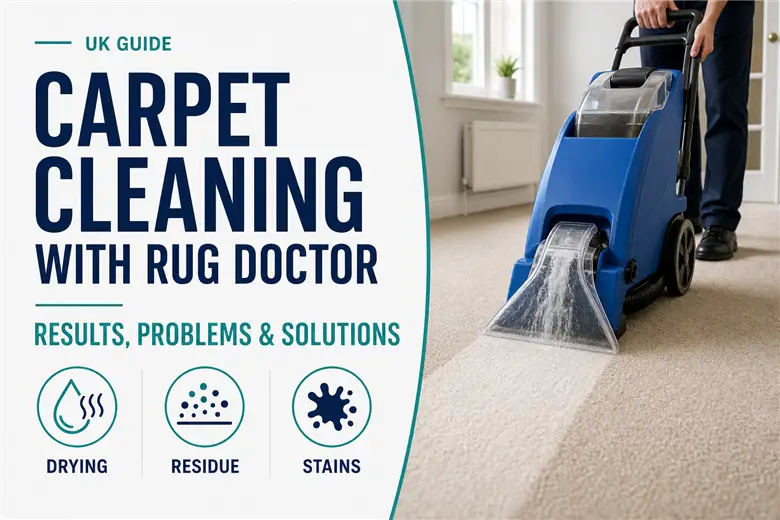
Carpet cleaning with Rug Doctor can give a carpet a visible lift when the carpet is lightly soiled, correctly vacuumed first and dried properly afterwards. It can also leave disappointing results when too much detergent is used, the carpet is overwet, old stains wick back up, or damp smells develop while the carpet is drying. This guide explains what results are realistic, how to use the machine more carefully and what to do if the carpet looks, feels or smells wrong afterwards.
If you are still deciding whether to hire a machine or book a professional clean, this article stays focused on Rug Doctor results and troubleshooting. For a fuller side-by-side comparison, read the Hobbs guide to Rug Doctor carpet cleaner vs professional carpet cleaning.

A Rug Doctor can improve dull carpet, light traffic marks and fresh surface dirt, but it is not a guaranteed stain removal system. The final result depends on carpet fibre, soil level, stains, detergent strength, extraction passes, ventilation and drying time. Most poor results come from three things: not vacuuming thoroughly before cleaning, using too much solution, or leaving the carpet too wet.
For best results, treat Rug Doctor carpet cleaning as a controlled cleaning job rather than a quick shampoo. Follow the machine instructions and avoid repeated wet passes. If the carpet feels too wet, make extraction-only passes without dispensing more solution.
On a lightly used carpet, you may see brighter colour, a fresher feel underfoot and less visible grey traffic shading. A hallway, lounge or bedroom that has general dust and everyday soil can often look noticeably better after one careful clean. That said, the carpet may not look brand new, especially if the pile is worn, flattened or permanently discoloured by sunlight, bleach, filtration lines or old spill damage.
On a heavily soiled carpet, the result can be mixed. Some areas may clean well while darker traffic lanes remain. This happens because traffic lanes are not always just dirt. They can include scratched fibres, oil from shoes, deep soil, compacted pile and old residues from previous products. A hire machine can remove some of this, but it may not fully restore the carpet if the wear is physical rather than soil-based.
Stains are also unpredictable. Fresh drink spills, muddy marks and light food spots may improve if treated correctly. Older stains, pet urine, strong dyes, rust, paint, ink and stains that have already been treated with supermarket products are harder to predict. Sometimes a stain looks better while wet, then reappears as the carpet dries because contamination underneath the surface travels back up through the fibres.
Preparation makes a big difference. A hire machine is designed to wash and extract, not to replace proper dry soil removal. If grit, hair and dry soil are left in the carpet, wet cleaning can turn some of it into a muddy slurry and make extraction harder.
Vacuum the carpet slowly in two directions before any wet cleaning. Pay special attention to edges, doorways, the front of sofas, dining areas and the main walking routes through the room. If the vacuum cleaner has adjustable height, set it so it agitates the pile without dragging too heavily. This step is boring, but it is one of the biggest differences between a cleaner-looking result and a patchy one.
Move small furniture out of the room before cleaning. For larger items that stay in place, keep the machine away from wooden legs, metal feet and furniture bases that could mark damp carpet. If you replace furniture before the carpet is fully dry, use protective tabs under legs so dye, varnish or rust cannot transfer into the pile.
Look at stains before applying more product. If a stain has colour, texture, smell or a sticky feel, it may need a specific approach. Scrubbing hard can distort the pile and spread the mark. If you are dealing with a difficult spill, the Hobbs guide on how to remove stains from carpet explains safer first steps before stronger cleaning is attempted.
Overwetting is one of the most common Rug Doctor problems. It usually happens when the user makes too many wet passes, moves too slowly while releasing solution, uses an incorrect detergent mix, or does not make enough dry passes afterwards. The carpet may look clean at first, but then take too long to dry, smell damp or show brownish patches.
Work in manageable strips rather than soaking the whole room quickly. Use the trigger only when making a wet pass, then release the trigger and make additional extraction passes over the same area. The dry passes should be slow and steady. You should see less and less water being recovered as you continue. If the recovery tank is not collecting much water, stop and check the machine setup before adding more solution to the carpet.
Avoid the temptation to go over a stain repeatedly with more detergent. That can push moisture deeper into the backing and underlay. A better approach is to clean the area carefully, extract thoroughly, allow it to dry and then assess what remains.
If the carpet is still very wet several hours later, the issue is usually too much moisture, poor extraction or weak airflow. Thick pile carpets, cold rooms, humid weather and poor ventilation can also slow drying. In a normal home, a cleaned carpet should be damp rather than wet underfoot, and it should keep improving as air moves through the room.
Open windows when weather allows, turn on heating if the room is cold, use fans to move air across the carpet and keep doors open so moisture can escape. Do not cover damp carpet with mats, plastic, cardboard or furniture. If the carpet still feels wet the next day, act quickly because prolonged moisture can lead to musty smells and backing issues.
For more drying detail, see the Hobbs guide on how long carpet cleaning takes to dry.
A sticky carpet usually points to detergent residue. This can happen when too much cleaning solution is mixed into the tank, when a spot treatment is over-applied, or when the carpet is not rinsed and extracted well enough. Sticky residue attracts fresh soil, so the carpet can start looking dirty again faster than expected.
If the carpet feels tacky after drying, do not add more detergent. Follow the machine instructions, and arrange professional rinse extraction if the sticky residue remains. Adding more water or product without checking the instructions can make drying harder and may leave more residue in the carpet.
Returning stains are often caused by wicking. This means soil or spillage below the visible surface moves back up the fibres as moisture evaporates. It is common with drink spills, pet accidents, old food marks and areas where too much water was used. The stain may look better immediately after cleaning, then return as a faint ring, shadow or darker patch.
If this happens, blot the area with a clean white towel and avoid scrubbing. Do not keep adding supermarket stain removers, especially if you are unsure what the original stain was. Repeated chemical use can set stains, bleach colour or leave residue that attracts soil. For red wine or tannin-based marks, Hobbs has separate guides on how to clean red wine from carpet and how to clean tea out of carpet.
A damp smell after cleaning usually means the carpet has stayed wet too long, residue has been left behind, or contamination in the carpet has been reactivated by moisture. Pet urine is a common example because wet cleaning can temporarily spread odour if the urine has reached the backing or underlay.
Start by improving airflow and warmth. Use fans, open windows where sensible and keep foot traffic low until the carpet is dry. Once fully dry, vacuum thoroughly. If the smell is sour, musty or urine-like and does not improve, the carpet may need a deeper rinse, odour treatment or inspection. The Hobbs guide on cleaning carpet from cat urine explains why pet odours can be difficult to remove with basic wet cleaning alone.
| Problem | Likely Cause | What to Do Next |
|---|---|---|
| Carpet feels very wet | Too many wet passes or not enough extraction | Increase airflow, add dry passes if possible and keep furniture off the damp area. |
| Carpet feels sticky | Detergent residue left in the pile | Avoid more detergent. Vacuum when dry and consider a careful clean-water rinse. |
| Stains return after drying | Wicking from deeper contamination | Blot only, let the area dry fully and avoid repeated stain remover use. |
| Damp or sour smell | Slow drying, residue or old contamination | Improve ventilation quickly and seek help if the smell remains after drying. |
If the carpet looks worse, smells damp or feels sticky after using a hire machine, pause before doing another full wet clean. More water and more detergent can make the problem harder to fix. First, identify whether the issue is moisture, residue, returning stains or permanent fibre wear.
Focus on drying before appearance. Increase ventilation, use fans and keep the room warm enough for evaporation. Do not walk over the carpet more than necessary. If a large area stays wet for longer than expected, it may need professional extraction to remove moisture from the pile more effectively.
Let it dry fully, then vacuum slowly. If it still feels tacky, residue is likely. A professional rinse can help remove detergent build-up without adding unnecessary product. This is especially useful if the carpet is already attracting fresh dirt soon after cleaning.
Do not keep scrubbing the same patch. Take a clear photo, note what caused the stain if you know, and avoid mixing products. A stain that has returned after drying often needs careful assessment rather than another general clean.
You may need help if the carpet remains damp, smells musty, feels sticky, has returning stains or has been cleaned more than once without improvement. Hobbs Cleaning Ltd provides professional carpet cleaning using pre-spray, agitation, hot water extraction, basic stain treatments and odour deodorisers where suitable.
The aim is not to overpromise. Some stains, fibre damage and colour loss cannot be fully reversed. However, a professional assessment can often identify whether the issue is residue, soil, moisture, odour contamination or permanent wear. You can check Hobbs carpet cleaning prices or contact Hobbs Cleaning Ltd if you need advice after a DIY clean.
Need Help After Rug Doctor Carpet Cleaning?
If your carpet is still wet, sticky, stained or smelling damp, Hobbs Cleaning Ltd can inspect the problem and recommend the safest next step.
Hobbs Cleaning Ltd helps homeowners with carpet cleaning and stain advice across Milton Keynes, Hertfordshire, St Albans, Aylesbury, and Dunstable and Luton.
Your carpet is usually still wet because too much solution was applied, not enough dry extraction passes were made, the room has poor airflow, or the carpet pile is thick. Improve ventilation, use fans and keep furniture off the carpet until it is properly dry.
A sticky feel usually means detergent residue has been left in the fibres. Let the carpet dry, vacuum slowly and avoid adding more detergent. If the tacky feel remains, the carpet may need a professional rinse and extraction clean.
Stains often return because moisture has drawn deeper contamination back up to the surface. This is called wicking. It is common with old spills, pet accidents and overwet areas. Avoid scrubbing and get the stain assessed if it keeps reappearing.
Increase airflow quickly and keep the room warm enough to dry. A damp smell can come from slow drying, detergent residue or old contamination being reactivated. If the smell remains after the carpet is dry, professional odour treatment may be needed.
Professional cleaning can often improve poor Rug Doctor results when the issue is residue, excess moisture, soil left in the pile or some types of stain. It cannot guarantee removal of permanent dye damage, fibre wear or colour loss, so inspection is important.
Carpet cleaning with Rug Doctor can be useful for light refreshes, but the best results come from careful preparation, controlled moisture, good extraction and fast drying. If the carpet is wet, sticky, stained or smelling damp afterwards, stop adding products and ask for advice before the problem becomes harder to correct.