- 30/07/2026
- in Carpet Care Guides, Carpet Cleaning Tips
- by Hobbs Cleaning Ltd
- 255
- 0
Blog
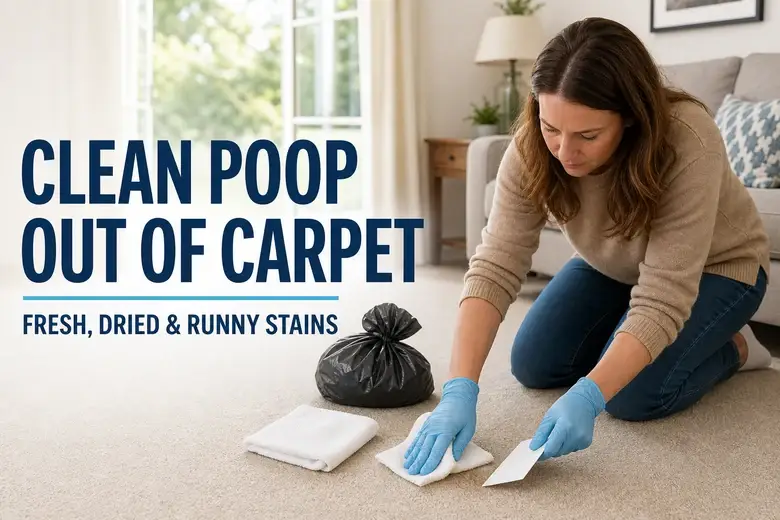
To clean poop out of carpet, put on disposable gloves, keep children and pets away, lift solid matter carefully, blot moisture, apply a suitable carpet-safe treatment sparingly, work from the outside towards the centre, avoid scrubbing and let the area dry fully. The safest method changes depending on whether the faeces are fresh and solid, soft or runny, or already dried into the carpet fibres.
This guide covers hygiene, fresh accidents, runny accidents, dried faeces, stains, odour, backing and underlay risks, and when professional help is sensible. For broader household marks, use the Hobbs guide to removing stains from carpet.
Wear disposable gloves, keep people and pets away, lift solid material upwards with disposable paper or a blunt scraper, then seal waste in a bag. Blot remaining moisture with clean white cloths, apply a small amount of carpet-safe stain treatment according to the label, blot again and avoid soaking. Do not scrub, vacuum visible faeces or mix cleaning products. Dry the carpet fully and arrange professional assessment if staining, smell or moisture remains.
Gather everything before touching the affected area. Moving around can spread contamination.
Clean white cloths show whether carpet dye is transferring during blotting. If colour appears on the cloth, stop using the product and get advice. Avoid universal homemade recipes, because fibres, dyes, backing and previous cleaning residues can react differently.
The first goal is controlled removal without spreading contamination. Keep children, pets and unnecessary foot traffic away. Cover cuts, wear disposable gloves, avoid touching your face and wash your hands thoroughly with soap and water after removing gloves.
Check any carpet-care information you have. Synthetic carpets, wool carpets, silk rugs and unknown fibres do not all tolerate the same products. Test treatment in a hidden area, follow the label and never mix products. A hard-floor disinfectant may damage carpet fibres, backing or dyes. Infection-control advice and carpet-fibre safety are not always identical.
Do not vacuum visible faeces with a normal household vacuum. It can push material deeper into the pile, contaminate the machine and spread particles. If human faeces may be linked to infectious stomach illness, prioritise personal hygiene, product instructions and appropriate professional advice.
Fresh solid poop on carpet is usually easier to control than runny contamination. The aim is to lift, blot and treat lightly rather than grind the mark into the pile.
If the poop stain on carpet looks lighter but still smells, do not keep adding product. More liquid can move contamination into the backing and make drying harder.

Runny faeces require more caution because liquid can spread quickly and penetrate deeper. If the area is large, reaches carpet edges, or the room is used by a vulnerable person, professional assessment is safer than repeated DIY treatment.
Put on gloves and, where suitable, a disposable apron. Keep people and pets away. Use disposable towels to contain the outer edge first, without pressing hard. Lift and blot in stages, changing towels frequently. Work gradually towards the centre and avoid widening the area.
Apply only a suitable carpet-safe product, following the label. Use limited moisture and blot dry after each pass. Ventilate and allow complete drying. If you are working out how to clean runny poop from carpet and moisture seems to have reached the backing or underlay, stop and ask a professional cleaner to inspect it.
Dried faeces can attach to carpet fibres and become more noticeable when moisture is added. The wrong approach can scrape fibres, spread colour or release odour.
Old contamination may reach below the visible surface. If you are asking how to clean dried poop from carpet after several hours or days, the result depends on fibre, backing, stain age and products already used.
The table below is guidance, not a diagnosis. A carpet can look better on the surface while contamination, moisture or residue remains below the pile.
| What you notice | Possible explanation | Sensible next step | When to call a professional |
|---|---|---|---|
| Light surface mark | Residue may still be sitting in the top fibres. | Blot lightly with the correct carpet-safe product. | If the mark spreads or dye transfers. |
| Yellow or brown stain | Organic colour may have bonded with the fibre. | Avoid bleach and test any treatment first. | If the carpet is wool, delicate or expensive. |
| Dark ring around the area | Moisture may have carried residue outward. | Stop adding liquid and allow controlled drying. | If the ring returns after drying. |
| Sour or faecal smell remains | Contamination could remain deeper in the pile. | Ventilate and avoid fragrance sprays. | If the smell is localised or strong. |
| Smell returns after drying | Backing or underlay might be involved. | Do not keep wetting the carpet. | If the odour returns in the same patch. |
| Sticky or stiff carpet | Product residue may be left in the fibres. | Stop applying more detergent. | If residue remains after gentle blotting. |
| Pale or bleached-looking patch | A product may have affected the dye. | Stop using chemicals immediately. | If colour loss is visible. |
| Colour transfers onto the cloth | The carpet may not be colourfast. | Stop treatment and keep the cloth for reference. | Before using any more product. |
| Moisture or smell seems to come from below the carpet | Backing, underlay or subfloor may be affected. | Keep airflow moving and avoid covering the area. | Arrange inspection before more DIY cleaning. |
Odour may remain when organic contamination reaches the deeper pile, carpet backing, underlay, subfloor or gaps around carpet edges. Fragrance can make the room seem better briefly, but it can hide the source.
Remove as much contamination as safely possible, blot with controlled moisture, dry the area fully and improve airflow. Avoid repeated sprays, heavy wetting or covering a damp area with powder. If odour returns after cleaning, read why carpet can smell after cleaning and consider professional assessment.
Online guides often recommend household remedies, but carpet fibres, backing and dyes react differently. Vinegar is not appropriate for every carpet, and excess liquid may move contamination deeper. Bicarbonate of soda should not be vacuumed while wet, because damp powder can clog fibres.
Bleach can permanently remove carpet colour. Hard-surface disinfectants may damage carpet, and products must never be mixed. Do not mix bleach with vinegar, ammonia or another cleaning product. Use one suitable carpet-safe treatment at a time, follow the label and test first.
The controlled carpet-removal principles are similar, but caution may change. Dog poop on carpet, cat poop on carpet and human faeces on carpet can vary by consistency, area size, possible illness, blood, food dyes, medication, parasites, repeated pet accidents, or whether a child or vulnerable person is involved.
Do not try to diagnose parasites, infections or health causes from the carpet mark. Faeces and urine need different treatment. For urine-specific accidents, see Hobbs Cleaning Ltd’s guide to removing cat urine smells from carpet. If vomit is also involved, use the separate guide to cleaning sick off carpet safely.
Stop DIY cleaning when the area is large, runny faeces have spread widely, blood is visible, the carpet is wool, silk, hand-made or delicate, carpet dye transfers, fibres become pale, rough or distorted, smell remains after drying, the stain returns, underlay may be affected, or the carpet stays wet.
You should also stop if several products have already been applied, infectious illness may be involved, a vulnerable person is involved, the accident happened in a commercial, care or childcare setting, or you cannot clean safely.
If blood is visible, avoid further DIY stain treatment and seek appropriate professional advice rather than adding more carpet-cleaning products.
A professional may assess the carpet fibre, stain age, affected area size, previous household treatments, colour stability, remaining organic contamination, moisture in the backing, underlay involvement and whether controlled rinsing and extraction are suitable. Hobbs Cleaning Ltd offers a professional carpet cleaning service for homes where ordinary blotting is not enough.
Complete stain, odour or contamination removal cannot be guaranteed before inspection. Sometimes the visible carpet can improve, but replacing underlay or other specialist work may be necessary when contamination has travelled below the carpet.
Tenants should act promptly, avoid hiding the problem with fragrance, photograph the area where appropriate and keep the product name and instructions for anything used. Allow enough drying time before furniture or foot traffic returns.
If significant contamination, staining or underlay damage may be involved, tell the landlord or agent rather than hoping the smell disappears. If staining or odour remains before checkout, arrange help before the final inspection. The Hobbs end of tenancy carpet cleaning guide explains how carpet condition can affect move-out checks.
Hobbs Cleaning Ltd helps homeowners with carpet stain and odour problems across Hemel Hempstead, Milton Keynes, St Albans, Hertfordshire, Aylesbury, Dunstable and Luton, and nearby service areas.
If a poop stain or smell remains after safe first response, start with the main carpet-cleaning service, check the Hobbs carpet cleaning prices, or contact Hobbs Cleaning Ltd for advice before applying more product.
Poop Stain or Smell Still Remaining?
Hobbs Cleaning Ltd can assess the carpet fibre, products already used and whether contamination may have reached the backing or underlay before recommending an appropriate next step.
View Carpet Cleaning Services | View Prices | Request a Free Quote
The fastest safe way is to glove up, keep people and pets away, lift solid material upwards, seal the waste, blot moisture and use a small amount of suitable carpet-safe treatment. Fast does not mean aggressive. Scrubbing, soaking or using several products can spread contamination, damage fibres and make odour harder to remove.
Clean dried poop from carpet by wearing gloves, lifting loose dried material carefully and softening only the remaining residue with a suitable carpet-safe product or limited moisture. Do not vacuum visible material, scrape harshly or cut the pile. Blot gradually with clean white cloths and stop if colour transfers or the fibres distort.
Clean runny poop from carpet by containing the outer edge first, then lifting and blotting in stages with disposable towels. Change towels frequently, avoid pressing hard and work towards the centre. Use only a suitable carpet-safe product and limited moisture. Large runny accidents, spreading contamination or underlay involvement should be professionally assessed.
Remove poop smell from carpet by removing as much contamination as safely possible, blotting with controlled moisture, drying the area fully and improving airflow. Do not mask the smell with fragrance or keep spraying products onto a damp patch. If the odour returns after drying, contamination may be deeper than the surface fibres.
You can only use disinfectant if the product label says it is suitable for your carpet fibre and you have tested it in a hidden area. Many hard-surface disinfectants are not designed for carpet and may affect dyes, backing or texture. Never mix disinfectant with bleach, vinegar, ammonia or other cleaning products.
Call a professional carpet cleaner if the area is large, runny, old, smelly after drying, affecting wool or delicate carpet, or possibly reaching the backing or underlay. You should also get help if blood is visible, several products have already been used, a vulnerable person is involved, or you cannot clean the area safely.
Hygiene source reviewed: The personal-hygiene and bodily-fluid handling advice in this guide was checked against official GOV.UK infection-control guidance.