- 01/07/2026
- in Carpet Care Guides, Carpet Cleaning Tips
- by Hobbs Cleaning Ltd
- 405
- 0
Blog
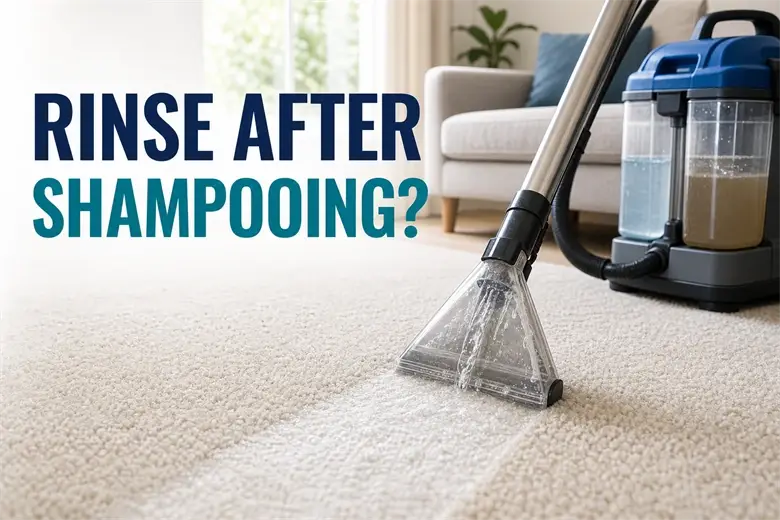
Do you have to rinse carpet after shampooing? Sometimes, but not always. Whether a separate clean-water rinse is needed depends on the shampoo, the machine and the manufacturer’s instructions. A controlled rinse and extraction may help when detergent residue remains, especially if the carpet feels sticky after shampooing or becomes dirty again quickly. However, adding more water to a carpet that is already wet, colour-unstable, wool-rich or moisture-sensitive can make the problem worse. Check the instructions first and stop if the carpet shows colour change, browning, odour or slow drying.
Sometimes, but not always. Some carpet shampoo systems are designed so the normal clean includes solution application and extraction. Other machines include a rinse-only or water-only setting, and some manufacturers recommend a water-only pass when residue remains. That means there is no safe rule saying every carpet must always be rinsed after shampooing.
The safest answer is to check the machine manual, read the product label and look at the condition of the carpet before adding more water. If the carpet is already slow to dry, smells damp, has dye transfer, shows brown or yellow patches, or has been treated with several products, more DIY rinsing can increase the risk of overwetting, wicking and odour.

Carpet shampoo residue is usually caused by too much cleaning solution, poor dilution, weak extraction or repeated cleaning passes that leave more detergent in the fibres than the machine can remove. The problem is common with hire machines and domestic carpet cleaners because the user controls the amount of solution, the speed of the passes and how many dry extraction passes are completed.
Residue can remain when extra shampoo is added for a stronger clean, when the product is not measured accurately, or when a foaming household product is used instead of a suitable carpet cleaner formula. Previous DIY attempts can add to the problem, especially if washing-up liquid, laundry detergent, scented disinfectant or stain-removal sprays have already been applied.
Machine performance matters too. Carpet cleaning equipment differs in how well it recovers water and soil. If the machine moves too quickly, the suction path is blocked, the dirty-water tank is full or the carpet pile is dense, more moisture and detergent can be left behind. That is why slow extraction-only passes are often just as important as the wet cleaning pass.
The signs below can suggest that shampoo has not been fully removed, although they do not prove it on their own. Similar symptoms can also come from old contamination, wicking, backing problems, fibre damage or unsuitable previous products.
If only one small area feels sticky, the issue may be localised. If a whole room feels tacky or soapy, the problem is more likely to involve dilution, rinsing, extraction or the product used across the clean.
Carpet gets dirty quickly after cleaning when detergent residue remains slightly sticky after the moisture evaporates. Dry soil then attaches to the carpet fibres more easily, especially near doorways, hallways, stairs and other traffic lanes. The carpet may look better for a few days, then begin to darken again as dust and grit bind to the residue.
The Carpet and Rug Institute warns that detergent residues can cause rapid or accelerated soiling when they are not removed properly. This is why adding more shampoo is rarely the answer to a carpet that looks dull after DIY cleaning. More product can make the fibres feel cleaner at first, but it can also leave the carpet more attractive to soil once dry.
Good vacuuming still matters after the carpet is fully dry. Dry soil removal can reduce the visible darkening caused by loose grit, but vacuuming will not always solve sticky carpet shampoo residue if product is still bonded to the fibre.
A water-only extraction pass may help on some suitable carpets when the machine manufacturer permits it and the carpet has already dried enough to avoid extra moisture risk. It should not be treated as a universal instruction. Some machines provide a rinse mode, while others are designed differently, so the manual matters.
Before using plain water, read the carpet cleaner instructions and the shampoo label. If the machine has a water-only or rinse setting, use that setting rather than improvising. Use the correct water temperature, avoid repeated wet passes and make additional extraction-only passes afterwards so the carpet is not left wetter than necessary.
If recovered water does not reduce, the carpet becomes wetter, the dirty-water tank fills very slowly or the machine seems to be losing suction, stop. Continuing can leave moisture deeper in the pile, backing or underlay. For drying concerns, the Hobbs guide on how long carpet cleaning takes to dry explains the main factors that affect drying time.
Do not add more water just because the carpet feels wrong. Extra moisture can make some problems worse, especially if the carpet is already damp or the backing has absorbed cleaning solution. Further wetting can increase the risk of slow drying, wicking, dye movement, browning, backing problems and musty odour.
Avoid further DIY rinsing if the carpet is still significantly damp, has already taken unusually long to dry, or is developing a musty smell. Stop if dye or colour transfers to a white cloth, brown or yellow patches appear, the carpet ripples, shrinks or changes texture, or the machine is failing to recover water properly.
Be especially careful with wool, wool-rich carpets, unknown fibres, older carpets, delicate carpets and any area where pet contamination may have reached the backing or underlay. If several cleaning products have already been used, adding plain water can move residues around rather than solving the problem.
The table below can help you decide whether residue, overwetting or another issue may be involved. It is a guide only. If the carpet is valuable, wool, colour-unstable or still wet, professional advice is safer than repeated DIY treatment.
| Symptom | Possible cause | Sensible next step |
|---|---|---|
| Sticky fibres after drying | Detergent residue | Check instructions and consider controlled water-only extraction |
| Carpet becomes dirty again quickly | Residue attracting soil | Vacuum thoroughly once fully dry and seek advice if it continues |
| Carpet remains wet for a long time | Excess water or poor recovery | Do not add more water; improve safe airflow |
| Brown or yellow patches | Wicking, previous soil or overwetting | Stop DIY treatment |
| Musty smell | Slow drying or deeper moisture | Increase ventilation and seek professional advice |
| Colour transfers to a white cloth | Dye instability | Stop immediately |
| Carpet feels stiff or crunchy | Dried product residue | Professional assessment may be needed |
A professional first needs to assess the carpet fibre, colour stability, existing moisture, previous products and the extent of the affected area. Where suitable, correction may involve controlled rinsing, extraction-only passes, suitable neutralising chemistry or another carpet-appropriate method. The exact process depends on what was previously used and whether the carpet or backing has been overwet.
Hobbs Cleaning Ltd may use fibre and colour assessment, moisture assessment, controlled solution application, appropriate rinse or extraction, additional recovery passes, and drying and ventilation guidance. That does not mean every carpet should simply be rinsed. The right process depends on the condition of the carpet when it is inspected.
If you are comparing the true DIY cost before trying again, the guide to the cost to shampoo carpet in the UK explains how machine hire, shampoo, time and risk can affect the overall value.
The best way to avoid sticky carpet after shampooing is to use less product, not more. Vacuum thoroughly first, use only a product approved for the machine and carpet, measure the solution accurately and do not add extra shampoo for a stronger clean.
Follow the machine’s wet-pass instructions, work in small sections and make enough extraction-only passes to recover moisture. Avoid repeatedly cleaning the same area unless the instructions allow it and the carpet is drying normally. Ventilate the room, use safe air movement and keep people and pets off the carpet until it is fully dry.
After the carpet has dried, vacuum again to remove loosened dry soil. If the same area darkens quickly, that may suggest residue, wicking or contamination rather than normal everyday dirt.
Contact a professional carpet cleaner if a whole room feels sticky, the carpet becomes dirty again soon after cleaning, odour returns after drying, the carpet remains wet for too long, brown patches or colour changes appear, pet contamination may have reached the backing or underlay, or several household products have already been used.
Professional advice is also sensible for wool, delicate or valuable carpets and for customers with a tenancy, sale or moving deadline. If you need help locally, Hobbs Cleaning Ltd provides professional carpet cleaning across Milton Keynes, St Albans, Hertfordshire, Aylesbury, and nearby areas.
For transparent pricing before booking, view the Hobbs Cleaning Ltd prices or contact Hobbs Cleaning Ltd with details of the carpet, what was used and how long it has been drying.
Is Your Carpet Sticky After Shampooing?
Hobbs Cleaning Ltd can assess whether detergent residue, excess moisture or another issue is affecting your carpet and recommend an appropriate cleaning process.
View our professional carpet cleaning service, check our prices or contact Hobbs Cleaning Ltd for advice.
No. It depends on the product, machine and instructions. Some systems include the rinse and extraction within the normal cleaning process, while others provide a separate water-only option.
Some machines permit water-only rinsing, but the manufacturer’s instructions must be checked first. Do not assume every machine or carpet is suitable.
The most common explanation is detergent residue, although previous cleaning products, contamination and fibre damage can cause similar symptoms.
It can. Sticky residue may attract and hold dry soil, causing traffic areas to darken faster.
Usually not without checking the instructions and the carpet’s condition. Adding water to an already wet carpet can increase drying and backing risks.
Often it can improve the problem where controlled rinsing or extraction is suitable, but the result depends on the carpet, previous products, moisture level and any existing damage.
Sources reviewed: Carpet and Rug Institute guidance on detergent residue and rapid re-soiling, together with manufacturer guidance on water-only rinsing and solution removal.