- 22/10/2026
- in Carpet Care Guides, Carpet Cleaning Tips, Commercial Cleaning
- by Hobbs Cleaning Ltd
- 19
- 0
Blog
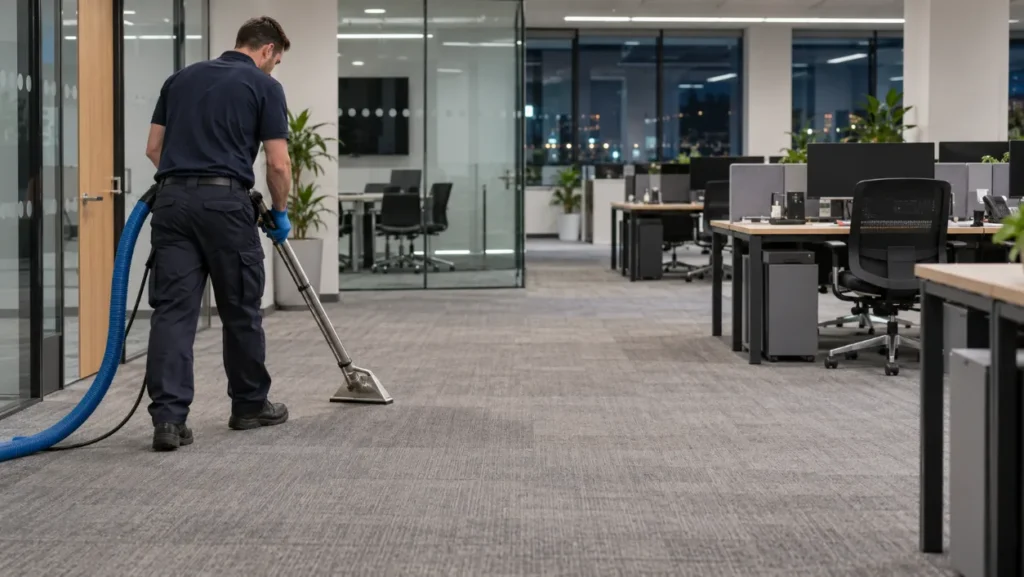
How often should office carpets be cleaned? There is no single timetable that suits every workplace. Many offices benefit from professional carpet cleaning every 6 to 12 months, while entrances, reception areas, corridors and other heavily used sections may need attention every 3 to 6 months. A quieter office may need a full professional clean less frequently, provided routine vacuuming and prompt spot treatment are maintained.
The right office carpet cleaning frequency depends on foot traffic, carpet construction, entrance matting, weather, spills, working hours and how quickly cleaned areas need to return to use. This guide explains how to set a practical schedule without waiting for the whole carpet to look visibly dirty.
Important: These are planning ranges, not fixed rules. Follow the carpet manufacturer’s maintenance guidance and adjust the programme to the premises, traffic and condition of the carpet.
An office rarely soils evenly. Entrance areas receive moisture and outdoor dirt, corridors carry repeated foot traffic, and desk areas may remain relatively clean. Dividing the premises into traffic zones allows the most heavily used areas to be maintained without cleaning every section at the same frequency.
| Office area | Typical use | Practical approach |
|---|---|---|
| Entrances and reception | Heavy traffic and tracked-in soil | Frequent vacuuming and spot treatment, with targeted interim or professional cleaning when traffic lanes begin to show |
| Main corridors and shared spaces | Repeated daily traffic | Inspect regularly and consider a 3 to 6-month cleaning cycle where appearance declines quickly |
| Open-plan offices | Moderate to heavy use | Often suited to a 6 to 12-month cycle, adjusted for occupancy and condition |
| Meeting rooms | Variable use, food and drink risks | Clean according to booking frequency, staining and presentation requirements |
| Private offices | Usually lighter traffic | Assess alongside the wider office clean, with less frequent cleaning where condition permits |
| Break areas with carpet | Food, drink and spill exposure | Prompt spot treatment and more frequent assessment than low-use office areas |
A small office used by a few employees has different requirements from a busy reception, call centre, school office or customer-facing workplace. Higher traffic usually means faster soil accumulation and more visible pathways.
Effective entrance matting can reduce the amount of moisture and soil carried onto the carpet, but the mats themselves must be cleaned and maintained. Entrances should normally receive more attention than low-use rooms.
Carpet tiles, low-profile commercial carpet and fitted broadloom carpets can require different cleaning methods. The manufacturer’s instructions, fibre type, backing and warranty conditions should be checked before setting a programme.
Coffee, food, tracked-in soil and other spills should be addressed promptly with a suitable method. Waiting until the next full clean can allow some marks to become more difficult to treat. Complete stain removal cannot be guaranteed because the outcome depends on the substance, carpet and previous treatment.
Customer-facing offices, reception areas and meeting spaces may need more frequent attention than back-office rooms. Cleaning can be planned around the areas visitors and staff use most often.
The available cleaning window affects the most suitable method. Some businesses can allow more drying time after a thorough extraction clean. Others need a lower-moisture approach that supports a quicker return to use.
Professional cleaning works best as part of a wider maintenance programme rather than as a response to a carpet that already looks heavily soiled.
The Carpet and Rug Institute’s commercial carpet standard similarly recommends a customised programme that includes entrance matting, scheduled vacuuming, spot removal, interim cleaning and deep-cleaning frequencies. Its guidance supports planning maintenance before soil becomes widely visible rather than treating cleaning as an occasional emergency.
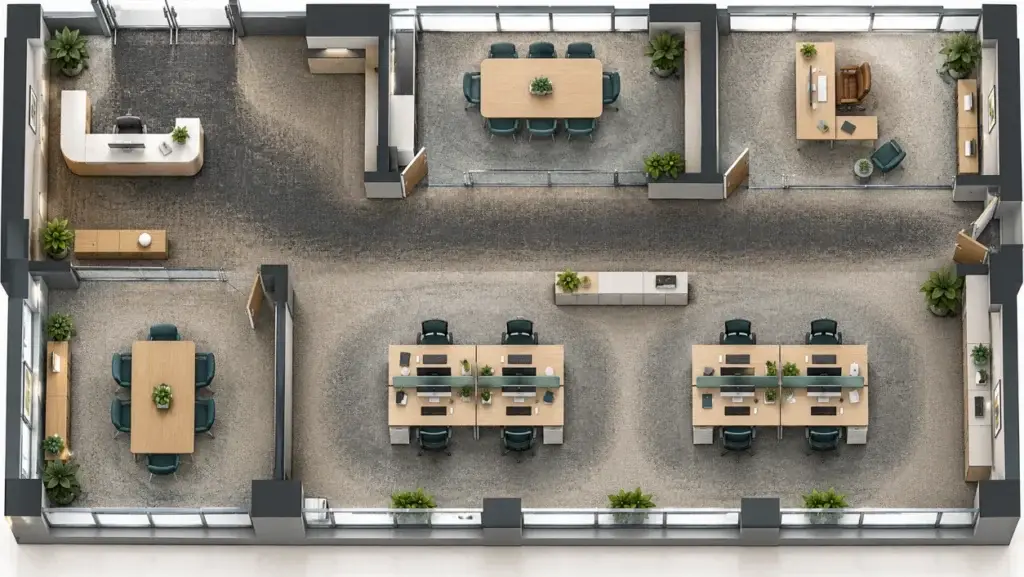
Illustration showing how entrances and corridors can receive heavier foot traffic than other office areas.
The most suitable method depends on the carpet, level of soiling, available drying time and operational requirements. Hobbs Cleaning Ltd can assess the premises and explain the recommended option before work begins.
Hot-water extraction can provide a thorough rinse and extraction process for suitable commercial carpets. It may be appropriate where the carpet condition, access and available drying period support this method.
Low-moisture and encapsulation carpet cleaning can suit many commercial carpet tiles and low-profile carpets. It uses less moisture than hot-water extraction and can reduce disruption where an office needs a quicker return to use.
For an office in Leighton Buzzard, Hobbs used the encapsulation cleaning method to support quicker drying and minimise disruption to the workplace. The company name is not included because permission to identify the customer was not obtained.
These signs do not automatically mean the entire office needs the same treatment. A site assessment can identify whether targeted maintenance, low-moisture cleaning or a wider extraction clean is more appropriate.
Tell Hobbs about your premises, carpeted area, location, access and preferred cleaning time. Quotations are free and carry no obligation.
Hobbs provides commercial and office carpet cleaning across Hertfordshire, Bedfordshire and Buckinghamshire. Local service information is available for businesses in St Albans, Harpenden, Watford and Leighton Buzzard.
Related services are available where suitable, including commercial upholstery cleaning, hard-floor care and stain protection. The recommended services depend on the surfaces, fibres and requirements of the premises.
A 6 to 12-month professional cleaning cycle is a useful starting point for many offices. Busy entrances, corridors and customer-facing areas may need targeted cleaning every 3 to 6 months. The final schedule should reflect traffic, carpet type, condition and manufacturer guidance.
No. Entrances and main walkways normally accumulate soil faster than private offices or lightly used rooms. A traffic-zone plan can prioritise the areas that need attention while avoiding unnecessary cleaning elsewhere.
Pre-booked commercial work can be planned around business operations, including out-of-hours appointments subject to availability. Access, security arrangements and the required return-to-use time should be discussed when requesting a quotation.
Low-moisture encapsulation is suitable for many commercial carpet tiles and low-profile carpets, especially when reduced moisture and quicker drying are priorities. It is not appropriate for every carpet or level of soiling, so the carpet should be assessed first.
Drying time depends on the cleaning method, carpet construction, room temperature, ventilation, humidity and level of cleaning required. Hobbs will provide return-to-use guidance for the selected method.
Provide the premises location, approximate carpeted area, carpet type if known, access information, furniture considerations, priority spots and preferred cleaning time. Photographs or a site visit may be useful depending on the job.
No. Many spots and stains can be improved, but complete removal cannot be guaranteed. Results depend on the substance, carpet fibre, age of the mark and any previous treatment.
Hobbs Cleaning Ltd provides professional office carpet cleaning with suitable hot-water extraction and low-moisture options across Herts, Beds and Bucks.
Industry reference: Carpet and Rug Institute commercial carpet maintenance and cleaning standards.