- 08/08/2026
- in Carpet Care Guides, Carpet Cleaning Tips
- by Hobbs Cleaning Ltd
- 311
- 0
Blog
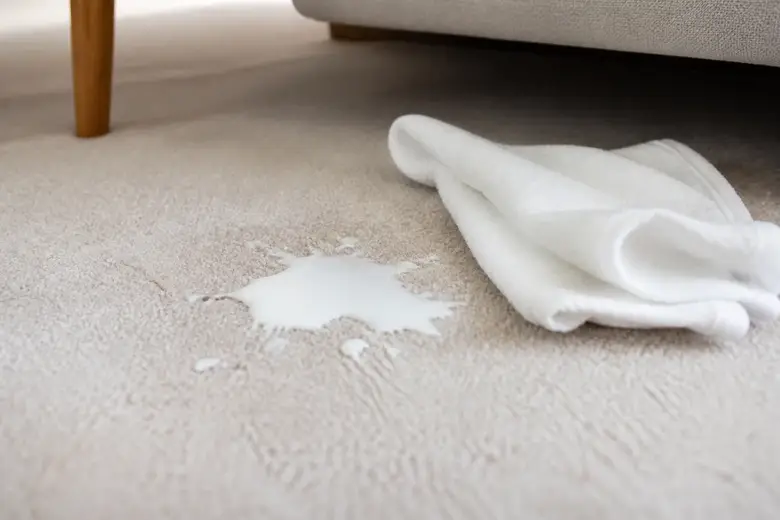
Fresh milk should be blotted up as quickly as possible using clean absorbent towels without rubbing it further into the carpet. Once you have removed as much liquid as you can, use only a small amount of an appropriate carpet-safe cleaning method, avoid soaking the carpet and allow it to dry fully. Dried milk or a lingering sour smell can be more difficult because milk residue may remain below the visible surface.
The first few minutes matter most. Milk is not just plain water, so the goal is to remove the liquid before it spreads deeper into the pile. Use a clean white towel or absorbent cloth and press down gently. If the towel becomes saturated, replace it with a fresh one and keep going until the area is only lightly damp. Blotting is better than rubbing because rubbing can push the spill wider and work it further into the fibres.
If the milk has splashed over a larger area, work in small sections so you do not spread the contamination. For family homes, Hobbs has a broader guide on general carpet stain removal, and its article on food and drink spills in family homes covers everyday accidents in more detail.
If the milk spill happened in a rented property and you are trying to keep on top of the finish before handover, Hobbs also has a practical end of tenancy carpet cleaning guide that explains the wider context.
Milk contains water, proteins, fats and sugars, which is why it behaves differently from a simple spill of clean water. Even when the surface looks tidy, a little residue may stay in the fibres. As that residue breaks down, an unpleasant sour smell can develop. The smell is often stronger when the spill was not treated quickly, when the carpet is deep or dense, or when moisture has been left in place for too long. If the spill reaches backing or underlay, or if cleaning residue is left behind, the smell can linger even after the visible stain has faded.
Fresh milk is usually the easiest situation to deal with. Start by lifting as much of the liquid as possible with an absorbent towel, then check the carpet fibre and care guidance before adding anything else. Controlled moisture is important here. You want enough cleaning action to lift residue, but not so much water that you create a bigger drying problem. Apply a carpet-safe cleaner sparingly if suitable, work from the outside edge towards the centre, then blot or extract the area again and leave it to dry fully.
Dried milk is more awkward because the residue has had time to settle into the fibres. The surface may feel slightly stiff or crusted, and an older smell may be more noticeable once the room warms up. For dried milk, it is usually best to soften the problem carefully rather than flooding it. Gentle re-treatment with a carpet-safe method may help, but the same rules still apply: use controlled moisture, avoid aggressive scrubbing and remove as much liquid as possible afterwards. Do not expect a dried spill to behave like a fresh one, because deeper residue can remain even when the surface looks better.
Masking a sour smell with fragrance does not remove the source. The key is dealing with any milk residue that remains and then letting the carpet dry properly. If the smell is still there after the carpet looks clean, it may mean the spill was larger than it first appeared or that moisture is still trapped in the pile. The carpet should not be repeatedly wetted just to chase the smell, because that can increase drying time and leave more moisture in the fibres.
If the carpet still smells after cleaning, the most likely reason is that some residue remains below the visible surface. Another common cause is too much water being used during DIY cleaning, which can slow drying and keep the odour active for longer. Cleaning solution residue can also cause the carpet to smell unpleasant if it has not been fully removed. Milk can travel into the pile, backing or underlay depending on the amount spilled and the carpet construction, so the surface may look better while the smell continues to come back later in the day or when the room gets warmer.
A carpet-cleaning machine may help in the right circumstances, especially if the carpet is suitable and the operator can avoid overwetting. A machine with good extraction can be useful for lifting residue after a milk spill, but it is not a magic fix and it will not guarantee the removal of a strong sour smell if contamination has travelled deeper. If you are using a machine, the cleaning solution must also be suitable for the carpet and applied carefully. Hobbs Cleaning Ltd has a useful guide to carpet cleaner solution for readers comparing different product types.
Washing-up liquid sounds convenient, but it can create problems if too much is used. Foam is one issue, but sticky residue is another. If washing-up liquid is left behind, it can attract dirt later and make the cleaned area feel worse rather than better. It can also be hard to rinse out of carpet fibres without adding more water than is sensible, so check that any product is suitable for the carpet and follow the instructions carefully.
Baking soda may sometimes be used as an absorbent or deodorising product after the actual milk contamination has been dealt with and the carpet is already appropriately dry. It can help with a lingering odour in the right circumstances, but it is not a guaranteed fix and it will not remove milk that is still sitting below the surface.
Vinegar is often suggested online, but it is not universally safe for every carpet. Fibres differ, dyes differ and backing materials differ. A product that seems harmless in one situation can behave unpredictably in another, especially if another cleaning product has already been used on the spot.
For that reason, the safer approach is to rely on a carpet-safe method that is suitable for the fibre and to test carefully before committing to a larger area.
Household bleach should not be used as a general treatment for milk spilled on carpet. It can damage fibres, affect colour and create unnecessary risk if used on the wrong material. Hobbs has a separate guide on can you use bleach on carpet, but bleach is not the right first response for milk.
A small surface splash is very different from a larger milk spill that has soaked through to the underlay. If the smell returns after surface cleaning, becomes stronger in warm conditions or keeps coming back after the carpet appears dry, that can be a sign that the contamination went further down than expected. In that situation, it may be sensible to ask for a professional assessment rather than continuing to treat only the top of the carpet.
There is no single drying time that suits every carpet. Drying depends on how much liquid was used, the carpet construction, the amount of extraction achieved, the room temperature, humidity and ventilation. The important point is that the carpet should be allowed to dry fully before you judge whether the smell has gone. Repeated wet cleaning can backfire, so it is better to use controlled moisture once, extract as much as possible and then leave the area to dry properly.
Wool and other delicate carpets deserve extra caution. Fibre type, colourfastness and manufacturer guidance all matter, and not every product is suitable for every material. A treatment that works on one synthetic carpet may be too harsh for a wool blend or a handmade rug.
If the carpet is wool, valuable, handmade, delicate or of unknown construction, it is usually safer to ask for professional advice before applying products. Moisture control is especially important here, because over-wetting can create more trouble than the milk spill itself. When in doubt, the correct response is to be conservative rather than experimental.
| Problem | Main Issue | First Priority | When Professional Help May Be Useful |
|---|---|---|---|
| Fresh milk spill | Liquid on the surface and in the pile | Blot quickly and avoid rubbing | If the spill is large or spread widely |
| Dried milk residue | Set residue may cling to fibres | Careful re-treatment with controlled moisture | If the stain is old or stiff |
| Sour smell | Milk residue still affecting the carpet | Remove the source and dry fully | If odour remains after drying |
| Large spill | More chance of deep penetration | Extract as much as possible without soaking | If the smell keeps returning |
| Wool or delicate carpet | Higher risk of damage from the wrong product | Check care guidance and test carefully | If fibre type or colourfastness is uncertain |
| Repeated DIY treatment | Residue from several products may build up | Stop adding more liquid | If the area feels sticky or still smells |
| Smell returning after drying | Possible deeper contamination | Reassess the source | If underlay or backing may be affected |
Professional help may be sensible if the spill was large, if the smell returns after drying, if milk may have penetrated deeply, or if the carpet is wool, delicate or of unknown fibre. It can also be worth asking for help if you have already tried DIY cleaning more than once and the area still smells sour or feels sticky.

If a milk spill has left a smell that will not shift, Hobbs Cleaning Ltd can assess the carpet and recommend a suitable cleaning approach. The business provides professional carpet cleaning and publishes current prices for customers who want a clearer idea of typical costs before booking. If you would like to ask a question or request a quote, use the contact page.
For readers weighing up whether to keep pushing ahead with DIY treatment or step back and book help, Hobbs also explains why professional carpet cleaning is worth it in a separate guide. Milk spills are common in busy homes, but they still need careful treatment.
Yes, in many cases milk can be removed if it is dealt with quickly and the carpet is not over-wet. Fresh spills are usually easier than dried residue or a spill that has reached deeper layers.
Blot up the liquid, avoid rubbing, use a small amount of a carpet-safe method if suitable, then blot or extract the residue and let the carpet dry fully.
Use careful re-treatment with controlled moisture rather than soaking the area. Dried residue may take more than one gentle pass and may still smell if the contamination is deeper.
Deal with the source, avoid repeated wetting and allow proper drying. If the smell remains after the carpet is dry, the residue may still be below the surface.
The milk may not have been fully removed, the carpet may not be fully dry or cleaning residue may still be present. Deeper contamination is another common reason.
Yes, if the carpet is suitable and the machine can be used with controlled moisture and good extraction. It will not solve every smell problem if the spill reached deeper layers.
It may help in some cases after the spill has been properly cleaned and the carpet is dry, but it is not a guaranteed fix for milk residue below the surface.
Not as a universal answer. Carpet fibres and dyes differ, so any product should be suitable for the carpet and tested carefully first.
No. Household bleach should not be used as a general treatment for milk spilled on carpet.
That can make the problem harder because the smell may return after surface cleaning. A professional assessment may be more appropriate in that situation.