- 03/08/2026
- in Carpet Care Guides, Carpet Cleaning Tips
- by Hobbs Cleaning Ltd
- 168
- 0
Blog
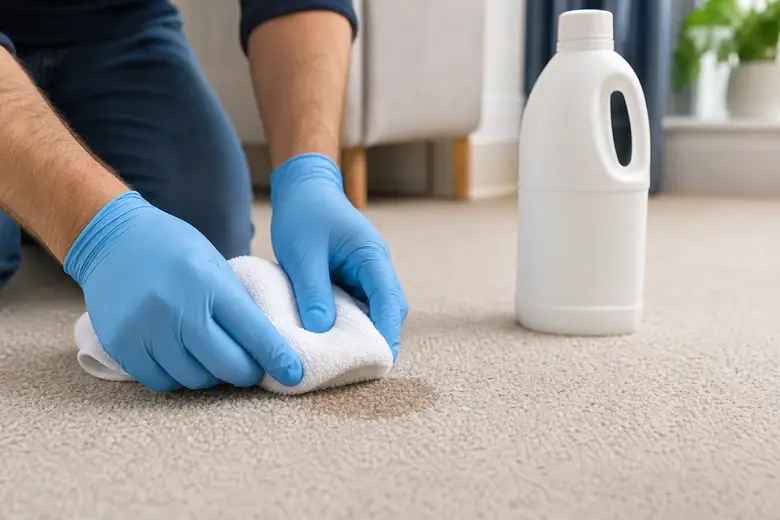
Household bleach on carpet should generally be avoided because it can lighten or remove colour and damage some fibres. Only use bleach where the carpet manufacturer confirms the carpet is bleach-cleanable and provides instructions. After an accidental spill, do not scrub, flood the carpet or add other products. Keep people and pets away, ventilate and assess the damage carefully.

You should not use bleach on carpet unless the carpet manufacturer specifically says it is suitable for that carpet and gives clear care instructions. Standard household carpet is generally not designed for bleach treatment, even when the carpet is pale, synthetic or described as stain-resistant.
Bleach can affect carpet dye, so a pale patch may not be a removable stain. It may be a chemically lightened area where colour has changed or been removed. Some fibres, backing materials, adhesives and previous treatments may also react poorly, especially if liquid reaches the base.
White carpet should not automatically be treated as bleach-safe. A white carpet can still contain dyes, brightening treatments, coloured backing or fibres that do not tolerate strong chemicals. Product labels and the carpet manufacturer’s guidance should take priority over online tips. For ordinary spills, use a carpet-specific approach such as the Hobbs guide to removing stains from carpet.
This quick guide explains why bleach on carpet needs careful judgement. The right next step depends on the fibre, dye, amount spilled, contact time and whether the carpet is officially bleach-cleanable.
| Carpet or situation | Is bleach normally suitable? | Main risk | Recommended next step |
|---|---|---|---|
| Standard synthetic carpet | Usually no, unless manufacturer-confirmed. | Colour loss, residue or uneven appearance. | Check care guidance before applying anything else. |
| White carpet | Not automatically. | Yellowing, cream patches or fibre damage. | Treat as colour-sensitive unless guidance says otherwise. |
| Wool carpet | No. Household bleach should not be used on wool carpet. | Fibre and dye damage. | Avoid further treatment and seek advice. |
| Natural-fibre carpet | Usually no. | Texture change, weakening or colour change. | Use minimal handling and get professional guidance. |
| Pale or colour-sensitive carpet | Usually no. | Patchy lightening that becomes obvious after drying. | Do not assume pale carpet is safer. |
| Carpet expressly labelled bleach-cleanable | Only within official instructions. | Wrong product, strength or contact time. | Follow the manufacturer’s care guidance exactly. |
| Fresh accidental bleach spill | No. | Spreading the chemical and increasing contact area. | Isolate, ventilate, blot carefully and keep the label. |
| Dried pale bleach mark | No. | The colour may already be altered or missing. | Arrange realistic assessment before more spot treatment. |
| Bleach on a rug | Usually no. | Dye bleed, fibre damage or backing issues. | Check fibre and construction before treatment. |
| Carpet previously treated with another cleaner | No. | Unpredictable residue and colour response. | Stop adding products and seek advice. |
When bleach gets on carpet, it can chemically change the carpet colour rather than leaving an ordinary surface stain. That is the important difference between a residue that might be cleaned and bleach damage that may involve altered dye.
Bleach marks may look pale, orange-toned, yellowish or uneven. In some cases the original colour is partly removed. In other cases the area looks worse after drying because the pile settles, surrounding soil becomes more visible, or the lightened area contrasts with the rest of the room.
Results depend on the carpet fibre, dye, product strength, contact time, amount spilled and earlier treatments. Excess liquid may also affect backing, joins or adhesives. A professional cleaner may assess whether residue remains, but cleaning cannot recreate missing dye.
After spilling bleach on carpet, the safest first response is to limit access, follow the product safety directions and avoid making the affected area larger. Do not rush into stain-removal experiments.
Where there has been personal exposure, strong fumes or a large chemical spill, follow the manufacturer’s safety instructions and seek appropriate professional or medical guidance. This article is not medical or hazardous-material advice.
After a bleach spill, avoid actions that spread liquid, add chemical uncertainty or make the carpet harder to assess. Scrubbing can distort fibres and widen the affected area. Flooding can push liquid into the backing or underlay.
Do not add vinegar, ammonia, acidic cleaners, peroxide, detergents, deodorisers or another household cleaner. Combining household cleaners can be hazardous and can also leave residues that complicate professional assessment. Heat can speed drying unevenly or affect some fibres, so do not apply heaters or hairdryers directly to the spill.
Use clean white towels rather than coloured cloths, keep the area out of use, and do not cover it before it has dried. Avoid repeated spot cleaners and do not assume the mark will disappear when dry. Do not recolour the carpet with pens, paint or household dye, as this can create a more permanent problem.
No, you should not use bleach on white carpet automatically. White carpet can still contain dyes, optical brighteners, fibre treatments, coloured backing or adhesives that are not bleach-safe.
Bleach may create an uneven white, cream, yellow or orange area. The fibre may also be unsuitable, especially if the carpet is wool, a wool blend, viscose or another delicate material. A hidden test does not override manufacturer restrictions because a small patch may not reveal delayed colour or texture changes.
If the care label does not clearly permit bleach, treat white carpet as ordinary carpet and avoid bleach cleaning. A safer route is to check the manufacturer’s care guidance or ask a professional before applying more product.
Bleach-cleanable carpet means the manufacturer specifically permits a certain type of bleach treatment under controlled instructions. It does not mean unlimited bleach can be poured onto the carpet.
Instructions may differ between brands, fibres and carpet ranges. The manufacturer’s product type, concentration, contact-time and rinsing guidance must be followed exactly. Carpet backing, fitting, underlay, nearby flooring, skirting and surrounding materials may still need protection.
A stain-resistant carpet is not automatically a bleach-cleanable carpet. A synthetic carpet should not be treated as bleach-cleanable unless the manufacturer explicitly says so. If the carpet is marketed as bleach-cleanable, keep the paperwork and follow the official guidance rather than a general online recipe.
Bleach marks cannot always be removed from carpet because the visible change may be missing or chemically altered colour rather than dirt sitting on the fibres. This is why a bleach mark should not be treated like a normal food or drink stain.
Cleaning may sometimes help remove remaining residue in suitable cases, especially if the area has not been overtreated and the fibre can tolerate cleaning. However, cleaning cannot guarantee restoration of lost dye. Results depend on the extent of exposure and the carpet’s construction.
A professional may need to inspect the carpet before discussing realistic options. If the colour loss is permanent, advice from an appropriate carpet repair, dyeing or replacement specialist may be required.
Professional carpet cleaning may help assess bleach damage, but it cannot recreate dye that bleach has removed or reverse permanent fibre damage. A professional assessment can still be useful because not every pale area has the same cause.
Assessment may help identify the carpet fibre, whether residue remains, whether the area has been oversaturated, whether earlier cleaning products are present and whether surrounding soil makes the pale patch appear more obvious. In some cases, cleaning the surrounding carpet may improve the overall appearance, but the bleach-damaged area may still remain visible.
For a broader explanation of realistic outcomes, read Hobbs Cleaning Ltd’s guide to what realistic carpet-cleaning results can look like. For the main service, see professional carpet cleaning.
No. Household bleach should not be used on wool carpet. Wool, wool blends, viscose, natural fibres, older carpet, handmade rugs and colour-sensitive carpet all require particular caution, so follow the manufacturer’s care guidance and seek professional advice after an accidental spill.
Strong chemicals can affect fibres and dyes. Loose, damaged or unknown carpet should be handled as little as possible after a spill. Do not aggressively rinse or scrub. If bleach has reached a wool carpet or delicate rug, stop applying products and seek professional advice before another treatment is attempted.
No, bleach should not be used for dog urine or pet accidents on ordinary carpet. It can remove carpet colour and may react unpredictably with previous cleaning residues.
Masking or disinfecting the surface does not necessarily treat contamination below the pile. Urine may have reached the backing or underlay, and adding another chemical blindly can make later assessment harder. For a focused pet-urine guide, read how to deal with fresh and dried dog urine safely.
No, bleach should not be used on blood stains in ordinary carpet unless specific professional guidance confirms otherwise. Bleach may alter carpet colour and can create a larger visible damage area.
Blood needs stain-specific and hygiene-aware handling, especially where the source is unknown or contamination is more than a small household mark. For separate guidance, read Hobbs Cleaning Ltd’s article on how to deal with household blood stains safely.
Bleach should not be used simply to cover or treat an unknown carpet smell or suspected mould issue. Odours may come from backing, underlay, moisture, spills, pet contamination or residue below the visible pile.
Adding bleach may damage colour without reaching the source of the smell. Unknown mould, widespread contamination or repeated dampness may require specialist assessment, and the moisture source must be addressed. Do not combine bleach with a deodoriser or another cleaner.
No, carpet stain protection does not make ordinary carpet bleach-proof. Stain protection may help with certain spills and soil, but it does not make carpet resistant to every chemical.
Bleach can still alter dyes or fibres, and manufacturer care instructions still apply. Hobbs Cleaning Ltd offers carpet stain protection for suitable carpets, but this should not be understood as protection against bleach damage.
You should contact a professional carpet cleaner when the bleach spill covers more than a very small area, the carpet fibre is unknown, the carpet is wool or delicate, or the area has visibly changed colour. Early advice may help prevent further unsuitable treatment.
Professional advice is also sensible if several products have already been applied, the carpet remains damp, a strong chemical smell remains, backing or underlay may be affected, or the spill is near edges, stairs or joins. Inspection may establish whether cleaning is appropriate, but permanent colour loss may require another specialist.
For context on value, equipment and careful assessment, see why professional carpet cleaning is worth considering. For common cleaning errors to avoid, read the Hobbs guide to carpet-care mistakes.
Hobbs Cleaning Ltd provides professional carpet cleaning and assessment across Hemel Hempstead, St Albans, Milton Keynes, Hertfordshire and nearby service areas.
A bleach mark is not always a cleaning problem, so honest assessment matters. Hobbs can help identify whether the carpet may benefit from cleaning, whether residue is likely to remain, and whether the visible problem looks more like colour loss than surface soiling.
Has bleach left a pale or discoloured mark on your carpet? Hobbs Cleaning Ltd can inspect the affected area, identify the carpet fibre and explain whether professional cleaning may help. Permanent colour loss cannot always be reversed, but an early assessment can help prevent further unsuitable treatment. View current carpet-cleaning prices or request an assessment.
You should not use bleach on ordinary carpet unless the manufacturer specifically confirms the carpet is bleach-cleanable and gives instructions. Bleach on carpet can remove colour, change dye, weaken some fibres and leave a pale mark that cleaning cannot always reverse.
No, not automatically. White carpet can still contain dyes, optical treatments, backing materials or fibres that do not tolerate bleach. Bleach may create uneven white, cream, yellow or orange patches, so manufacturer care guidance should be checked before any bleach treatment is considered.
Keep people and pets away, ventilate, follow the safety instructions on the product label and blot carefully with clean white towels. Do not scrub, flood the carpet or add another chemical. Keep the container available in case a professional needs to understand what was spilled.
A bleach mark cannot always be removed because the pale area may be missing or altered colour rather than a normal stain. Cleaning may sometimes help with residue, but it cannot guarantee restoration of lost dye or make every chemically lightened area invisible.
Bleach can permanently damage carpet when it alters dyes, lightens colour or affects fibre structure. The result depends on the carpet, product strength, amount spilled and contact time. A professional inspection can help assess the damage, but permanent colour loss may remain.
Professional carpet cleaning can sometimes help assess the area, remove suitable residue or clean surrounding soil so the room looks more even. It cannot recreate dye that bleach has removed, and it cannot reverse permanent fibre damage caused by chemical exposure.
Bleach-cleanable carpet means the manufacturer permits a specific bleach treatment under stated conditions. It does not mean any bleach can be used in any amount. The official instructions for product type, contact time, rinsing and restrictions must be followed carefully.
No. Household bleach should not be used on wool carpet. Wool and wool blends can be damaged by bleaching agents, so stop applying products and follow the manufacturer’s care guidance or seek professional advice after an accidental spill.
No, bleach should not be used to clean dog urine from ordinary carpet. It can damage colour and may not reach contamination in the backing or underlay. Pet urine needs a fibre-safe, contamination-aware approach rather than another strong chemical added blindly.
Bleach should not be used on blood stains in ordinary carpet unless specific professional guidance confirms otherwise. It may alter carpet colour and make visible damage worse. Blood stains also need careful, stain-specific and hygiene-aware handling.
No, stain protection does not make carpet bleach-proof. It may help with certain spills and soil, but bleach can still alter dyes or damage some fibres. Manufacturer care guidance remains the deciding authority for chemical exposure.
Do not improvise by flooding the carpet or adding another chemical. Follow the bleach product label and the carpet manufacturer’s care guidance, or seek professional advice where the fibre, residue or visible damage is uncertain.